
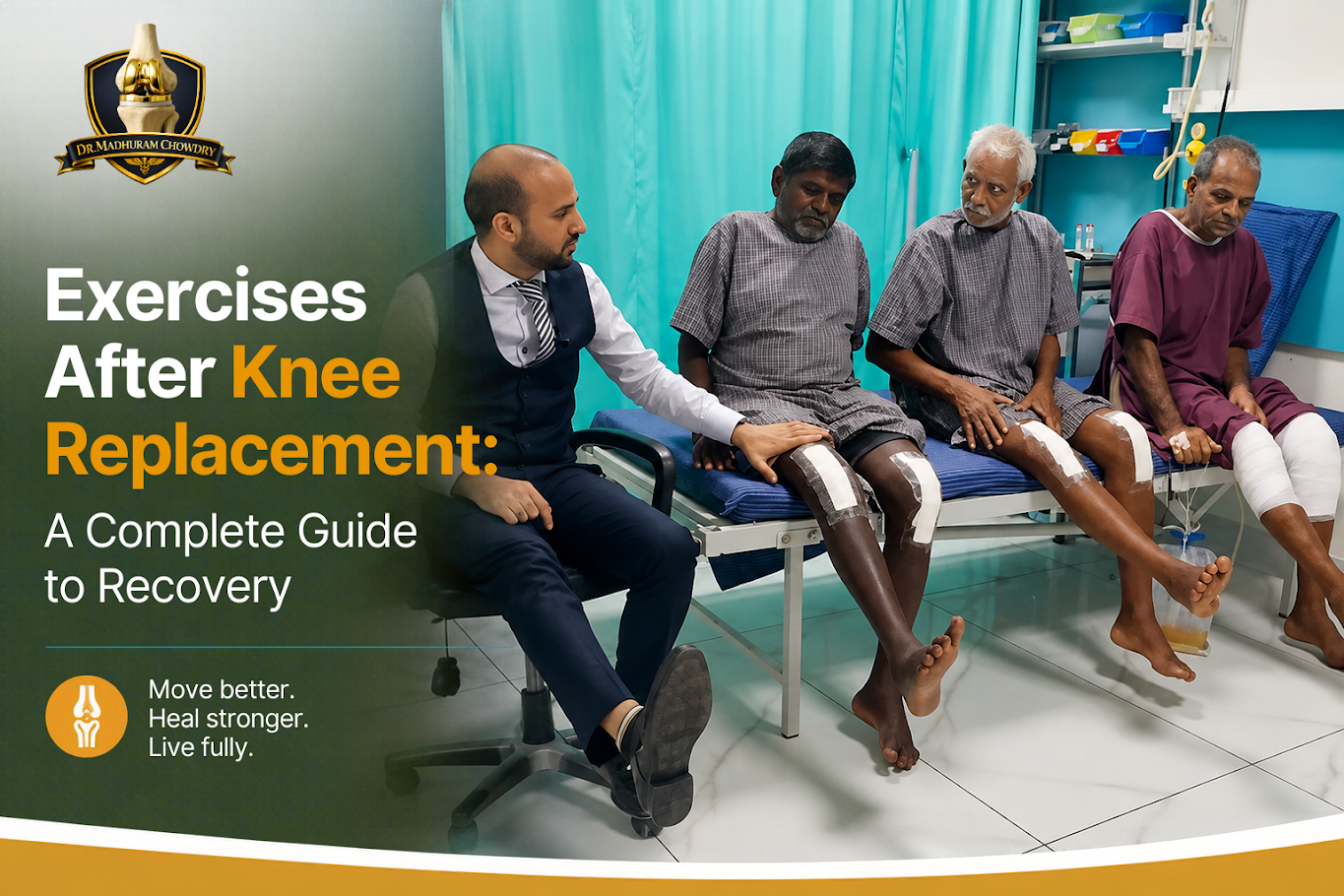
Knee replacement surgery can significantly reduce pain and help you return to everyday activities, but surgery is only one part of the recovery journey. The exercises you perform after knee replacement play an important role in restoring knee movement, rebuilding muscle strength and improving your ability to walk and perform daily activities.
After surgery, your orthopaedic surgeon and physiotherapist will create a rehabilitation plan based on your individual condition, type of surgery, strength, mobility and progress. Regularly performing the recommended exercises can help improve movement and strength as your knee heals.
Table of Contents
- Why Are Exercises Important After Knee Replacement?
- When Should You Start Exercises After Knee Replacement?
- Best Exercises After Knee Replacement
- Exercises as Your Recovery Progresses
- How Often Should You Exercise After Knee Replacement?
- Walking After Knee Replacement
- Can Exercises Help Improve Knee Bending After Replacement?
- What About Pain and Swelling During Exercise?
- Exercises and Activities to Avoid After Knee Replacement
- When Can You Climb Stairs After Knee Replacement?
- When Can You Return to Normal Activities?
- Warning Signs You Should Not Ignore
- How Dr. Madhuram Can Help With Your Knee Replacement Journey
- Final Takeaway
- Frequently Asked Questions
Why Are Exercises Important After Knee Replacement?
After knee replacement, the muscles around the knee can be weak because of the long period of pain and reduced activity before surgery. Surgery itself can also temporarily affect muscle strength and knee movement.
A structured rehabilitation programme helps you gradually regain:
- Knee flexibility and range of motion
- Quadriceps and leg strength
- Balance and stability
- Walking ability
- Confidence with everyday movements
- Ability to climb stairs and perform daily activities
Hospitals and physiotherapy services commonly recommend gradually progressing exercises rather than attempting difficult movements immediately after surgery.
The goal is not simply to exercise as much as possible. The goal is to exercise correctly and progress safely.
When Should You Start Exercises After Knee Replacement?
Exercise and movement usually begin soon after surgery under the guidance of the healthcare team.
Your physiotherapist may introduce simple movements while you are still in hospital. These can include ankle movements, gentle knee exercises, muscle contractions and supported mobility.
Walking is also generally introduced early with appropriate support such as a walker or crutches. The NHS notes that patients are commonly helped by nurses and physiotherapists to begin walking soon after surgery.
However, the exact timing of each exercise varies from patient to patient. Do not start a new exercise simply because it is recommended online. Your surgeon or physiotherapist should confirm that the exercise is appropriate for your stage of recovery.
Best Exercises After Knee Replacement
The exercises below are commonly included in knee replacement rehabilitation programmes. They are examples for educational purposes and should not replace the individualized programme provided by your doctor or physiotherapist.
1. Ankle Pumps
Ankle pumps are simple movements that can be introduced early after surgery.
How to do them:
- Lie comfortably or sit with your leg supported.
- Slowly move your foot up towards you.
- Slowly move your foot down away from you.
- Repeat gently as advised by your physiotherapist.
Ankle exercises are commonly included in early knee replacement rehabilitation because movement of the ankle encourages lower-limb circulation.
2. Quadriceps Sets
The quadriceps muscles at the front of your thigh are important for standing, walking and climbing stairs. After surgery, these muscles may feel weak.
How to do a quadriceps set:
- Lie on your back with your operated leg straight.
- Gently tighten the thigh muscle and press the back of your knee towards the bed.
- Hold briefly, then relax.
Your physiotherapist will advise you on the number of repetitions and how often to perform the exercise. Quadriceps contractions are commonly included in early post-operative exercise programmes.
3. Heel Slides for Knee Bending
Regaining knee bending is an important part of recovery. Heel slides can help you gradually work on knee flexion.
How to perform a heel slide:
- Lie on your back with your legs relaxed.
- Slowly slide the heel of your operated leg towards your body, allowing your knee to bend.
- Move only as far as advised by your physiotherapist.
- Then slowly slide the heel back to the starting position.
Some rehabilitation programmes use assisted knee bending with a towel or band as recovery progresses. Do not force the knee into a painful position.
4. Knee Extension Exercise
Regaining the ability to straighten your knee is also important. One commonly used technique involves supporting the ankle while allowing the knee to gradually straighten.
A rolled towel may be placed under the ankle while the knee is allowed to relax into extension, depending on your physiotherapist's instructions.
Your physiotherapist can show you the correct positioning and duration for your particular recovery.
5. Seated Knee Bends
Once you are able to sit comfortably, your physiotherapist may introduce seated knee-bending exercises.
- Sit on a stable chair.
- Slowly slide your operated foot backwards while keeping your foot supported on the floor.
- Allow the knee to bend as far as comfortably possible according to your rehabilitation instructions.
- Then return your foot forward.
This can help progressively improve knee flexion.
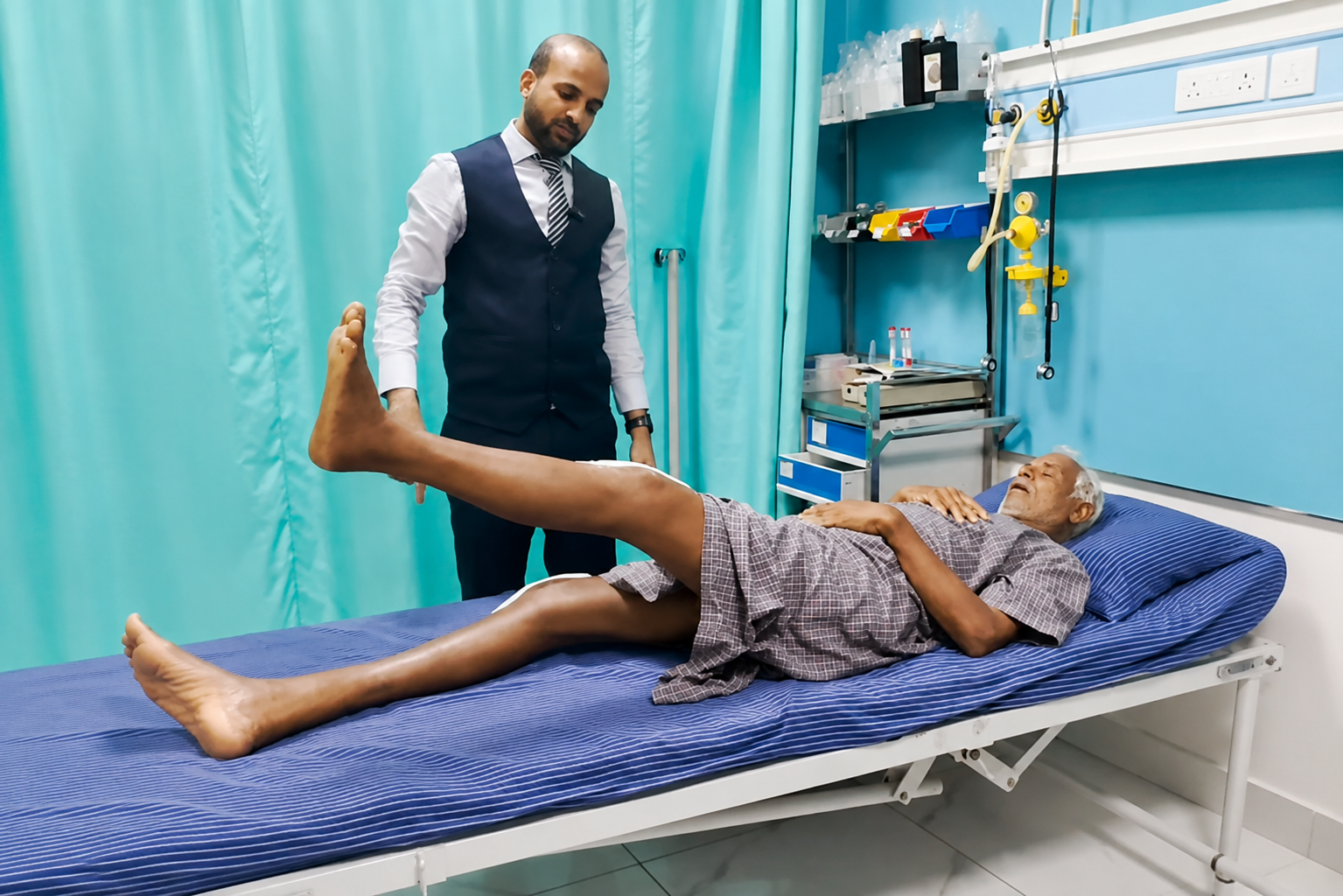
6. Straight Leg Raises
Straight leg raises may be introduced when your quadriceps are sufficiently active and your physiotherapist considers the exercise appropriate.
- Lie on your back.
- Keep the operated knee straight and tighten your thigh muscle.
- Lift the leg slowly while maintaining the knee in a straight position.
- Lower it with control.
This exercise should be performed only when recommended by your rehabilitation team because the ability to perform it safely depends on your stage of recovery and muscle control.
Watch Video Demonstration
Explore expert physiotherapy techniques and rehabilitation demonstrations on Instagram.
View Demonstration Reel on Instagram
Exercises as Your Recovery Progresses
Your exercise programme should not remain exactly the same throughout recovery. As your strength and mobility improve, your physiotherapist may gradually introduce more challenging exercises.
These may include:
- Sit-to-stand exercises
- Calf raises
- Step exercises
- Mini squats
- Resistance exercises
- Balance exercises
- Stationary cycling
- Walking progression
A rehabilitation programme from the Royal National Orthopaedic Hospital, for example, progresses from basic knee extension and quadriceps work towards strengthening, functional exercises, stairs, cardiovascular fitness and stretching.
The important principle is gradual progression. Doing a more difficult exercise before your knee is ready does not necessarily mean you will recover faster.
How Often Should You Exercise After Knee Replacement?
There is no single exercise schedule that is suitable for every knee replacement patient.
Some rehabilitation programmes recommend exercises several times throughout the day, particularly during the early stages, while the number of repetitions and duration are adjusted according to the patient's ability and recovery.
Your programme may change as your knee becomes stronger. Instead of copying a generic routine from the internet, follow the programme given by your surgeon and physiotherapist. Consistency is more important than trying to do too much at once.
Walking After Knee Replacement
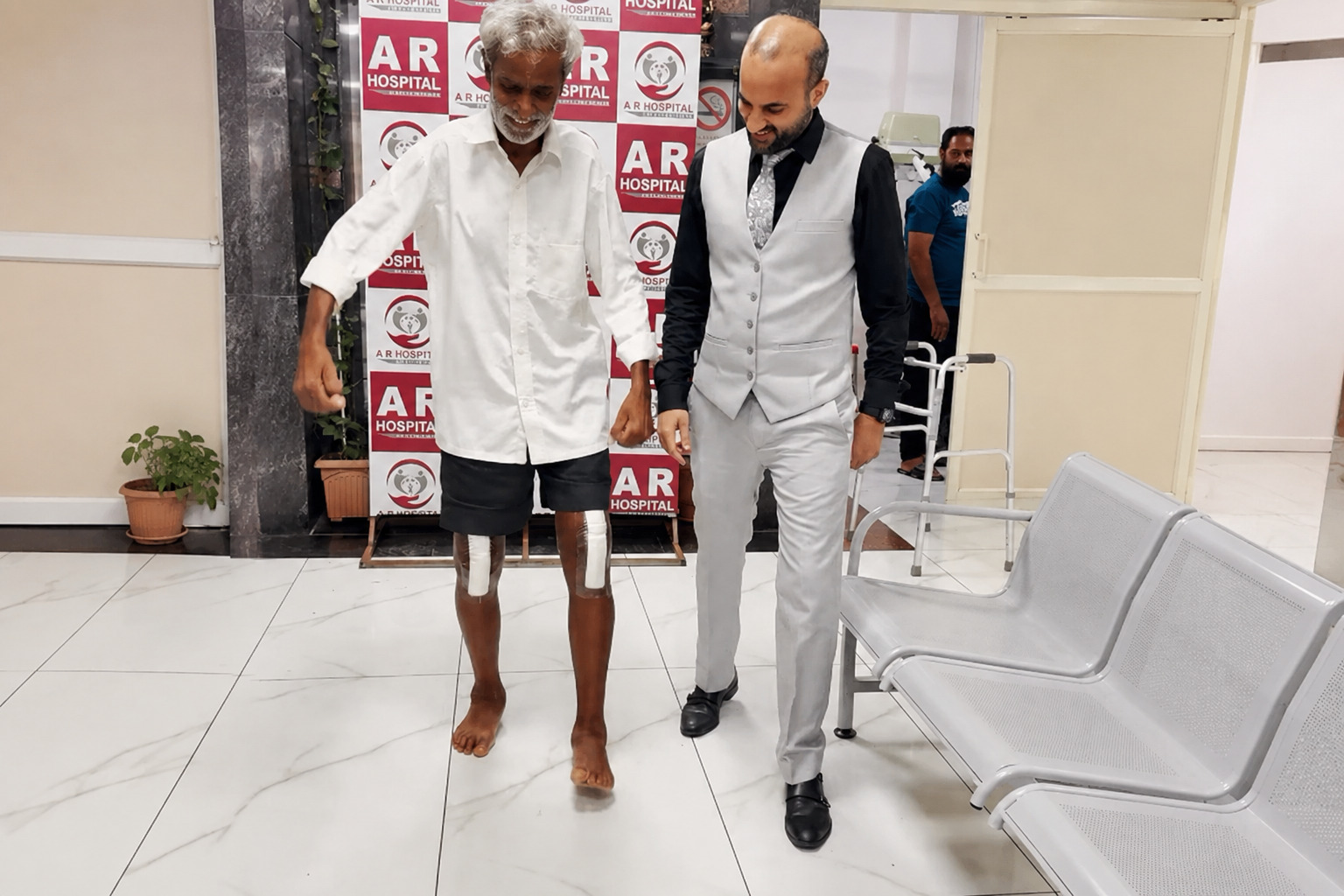
Walking is an important part of rehabilitation.
Initially, you may need a walker, crutches or another walking aid. As your strength, balance and confidence improve, your physiotherapist may gradually reduce your dependence on these aids. The NHS advises patients to use walking aids initially and progress according to confidence and recovery.
Try to focus on:
- Maintaining good posture
- Taking controlled steps
- Avoiding unnecessary limping
- Following your prescribed walking progression
- Taking adequate rest
Your walking distance should increase gradually rather than suddenly.
Can Exercises Help Improve Knee Bending After Replacement?
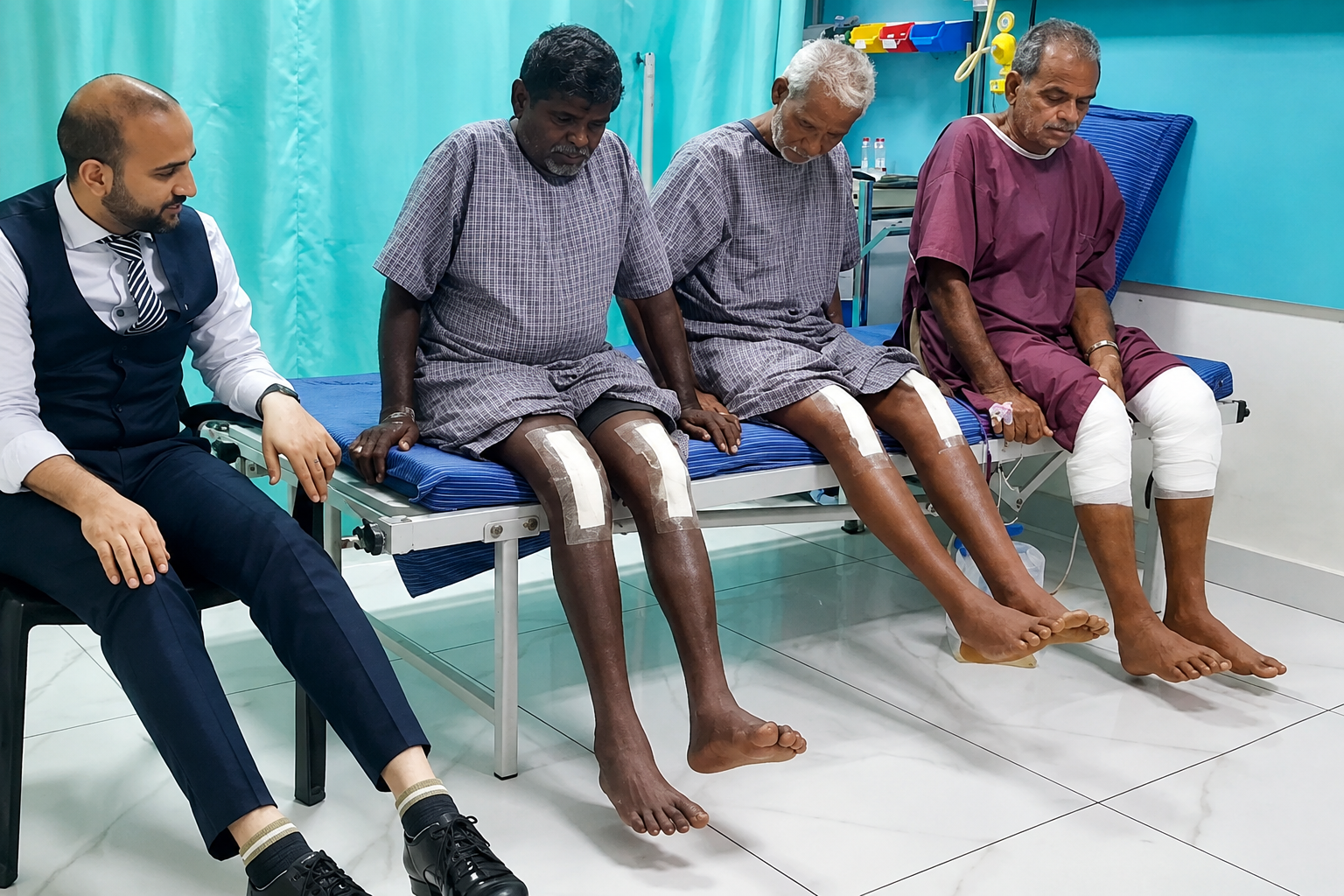
Yes, rehabilitation exercises are an important part of restoring knee movement after surgery. Exercises such as heel slides, seated knee bends and other mobility exercises may be incorporated into your rehabilitation programme.
However, more bending is not always achieved by simply pushing harder. Swelling, pain, muscle weakness and individual healing can all influence your range of motion.
Your physiotherapist can assess your knee movement and determine which exercises and stretches are appropriate.
What About Pain and Swelling During Exercise?
Some discomfort can occur during rehabilitation, especially as you begin moving a stiff knee. However, significant or worsening pain should not simply be ignored.
If an exercise causes unusual pain, excessive swelling or other concerning symptoms, stop and discuss it with your healthcare team.
Swelling can continue for weeks or even months during recovery. Rehabilitation guidance emphasizes gradual progression and adjusting exercises when pain or difficulty is excessive. Your recovery should be progressive, not forced.
Exercises and Activities to Avoid After Knee Replacement
Not every exercise is appropriate immediately after surgery. Depending on your stage of recovery, your doctor or physiotherapist may advise you to avoid:
- High-impact activities
- Sudden twisting movements
- Exercises that cause significant pain
- Heavy lifting
- Uncontrolled squats or lunges
- Activities that place excessive stress on the healing knee
The appropriate restrictions can differ between patients. For example, the NHS advises avoiding twisting the knee and heavy household activities during the early recovery period and recommends following the exercises provided by your physiotherapist. Always ask your surgeon before returning to demanding physical activities.
When Can You Climb Stairs After Knee Replacement?
Stair training is commonly included as part of rehabilitation. Initially, you may need support from a handrail and walking aid. Your physiotherapist can teach you the safest technique based on your strength and balance.
As your quadriceps and other leg muscles become stronger, you may gradually progress to more normal stair climbing. Some rehabilitation programmes include step-ups and controlled step-down exercises as strength and function improve.
When Can You Return to Normal Activities?
Recovery time varies considerably. Your age, general health, muscle strength, activity level, type of surgery and progress with rehabilitation can all influence recovery.
Many patients gradually return to everyday activities over the weeks following surgery, but complete recovery can take several months or longer.
Rather than comparing your recovery with another person's, focus on your own progress. Your follow-up appointments are important because your surgeon can assess your wound, knee movement, strength and overall recovery.
Warning Signs You Should Not Ignore
Exercise is an important part of recovery, but certain symptoms require medical attention. Contact your healthcare provider if you develop symptoms such as:
- Increasing redness around the wound
- Significant or worsening swelling
- Increasing pain that does not improve
- Wound discharge
- Fever
- Sudden calf pain or swelling
- Difficulty breathing or chest pain
Do not attempt to exercise through potentially serious symptoms. If you experience sudden chest pain or difficulty breathing, seek emergency medical attention.
How Dr. Madhuram Can Help With Your Knee Replacement Journey
Knee replacement is not simply about replacing a damaged joint. A successful recovery involves appropriate surgical planning, rehabilitation, gradual strengthening and follow-up care.
For patients considering robotic-assisted knee replacement, understanding the complete treatment journey can help you make informed decisions.
Read our comprehensive guide: Robotic Knee Replacement in Mysore: Complete Guide
You can also explore our related articles:
- Stage 4 Knee Arthritis: Symptoms, Causes & Treatment
- 15 Early Signs You May Need a Knee Replacement
- PRP vs Knee Replacement
- How Soon Can You Walk After Knee Replacement?
- Bilateral Knee Replacement: Benefits, Risks & Recovery
These articles can help you understand knee arthritis, treatment options, surgery and recovery as part of one connected patient education journey.
Final Takeaway
Exercises after knee replacement are an important part of your recovery. The right rehabilitation programme can help you gradually regain knee movement, rebuild strength and return to everyday activities.
But remember: more exercise is not always better. Correct exercise, at the right stage, is what matters.
Your surgeon and physiotherapist should guide your rehabilitation based on your individual condition and progress.
If you are considering knee replacement and want to understand your surgical options, recovery and rehabilitation, explore our Robotic Knee Replacement in Mysore: Complete Guide or consult Dr. Madhuram for an individualized assessment.
Frequently Asked Questions About Exercises After Knee Replacement
Common rehabilitation exercises include ankle pumps, quadriceps contractions, heel slides, knee extension exercises, seated knee bends and strengthening exercises. The exact exercises should be selected according to your individual recovery plan.
Movement and basic exercises are often started soon after surgery under the supervision of the healthcare team. Your physiotherapist will decide when you should progress to more challenging exercises.
The frequency varies depending on the exercise and stage of recovery. Some programmes recommend performing exercises several times a day, while others are adjusted according to the patient's progress. Follow your physiotherapist's instructions rather than a generic online schedule.
Exercises such as heel slides and seated knee bends may help gradually improve knee flexion. Your physiotherapist can assess your range of motion and recommend appropriate exercises and progression.
Some discomfort may occur during rehabilitation, but significant, unusual or worsening pain should not be ignored. Inform your healthcare team if an exercise causes excessive pain or swelling.
Walking is generally introduced early with appropriate assistance, such as a walker or crutches. The distance and walking aid are gradually adjusted according to your strength, balance and recovery.
Yes. Many patients are given home exercise programmes after surgery. However, the exercises should be prescribed or approved by your physiotherapist or surgeon and progressed appropriately.
Recovery varies from person to person. Many patients gradually return to everyday activities over several weeks, while full recovery can take several months or longer.