
PRP vs Knee Replacement is a common question among people dealing with persistent knee pain, stiffness and reduced mobility. Although both treatments may be considered for knee problems, they are very different approaches. PRP is a non-surgical injection treatment, while knee replacement is a surgical procedure that replaces damaged portions of the knee joint.
The right treatment depends on several factors, including the severity of knee arthritis, the extent of joint damage, your symptoms, previous treatments and how much your knee condition affects your daily life.
So, PRP vs Knee Replacement—which is better? There is no single answer for everyone. PRP may be considered for selected patients with symptomatic knee osteoarthritis, while knee replacement may be recommended when advanced joint damage causes persistent pain and significant functional limitations.
This guide explains the differences, benefits, limitations, recovery and situations in which each treatment may be considered.
PRP vs Knee Replacement: What Is the Difference?
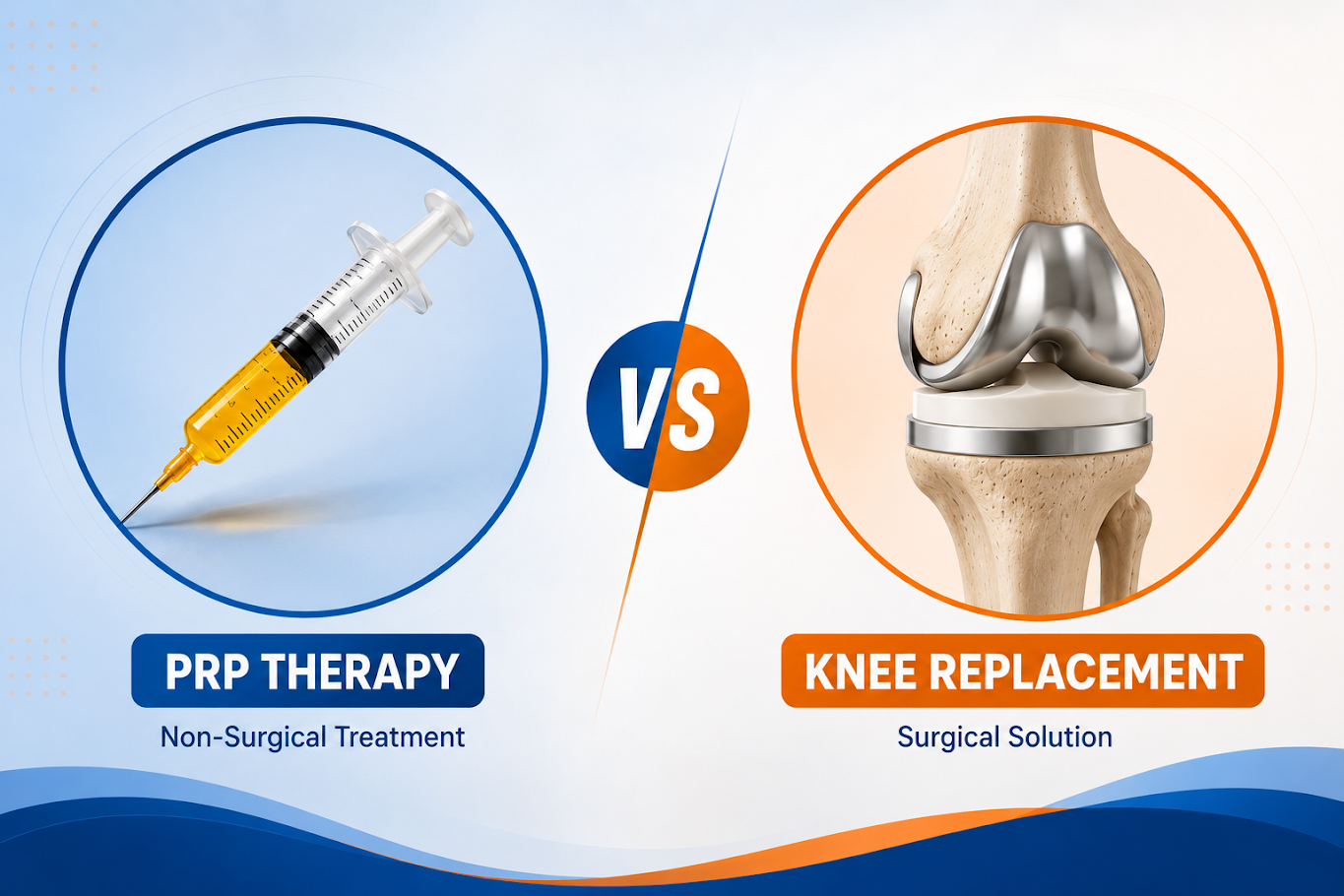
The most important thing to understand about PRP vs Knee Replacement is that these treatments work in completely different ways.
PRP stands for platelet-rich plasma. It is prepared using a small sample of the patient's own blood. The blood is processed to concentrate platelets, and the resulting preparation is injected into the affected knee.
Knee replacement is a surgical procedure in which damaged portions of the knee joint are removed and replaced with artificial components.
PRP vs Knee Replacement at a Glance
| Factor | PRP | Knee Replacement |
|---|---|---|
| Treatment type | Non-surgical injection | Surgery |
| Joint replaced? | No | Yes |
| Main purpose | Manage symptoms in selected patients | Replace damaged joint surfaces |
| Recovery | Generally less extensive | Requires rehabilitation |
| Suitable for | Selected patients with symptomatic arthritis | Selected patients with advanced joint damage |
Therefore, the question should not simply be, "Which treatment is better?"
The more important question is:
What Is PRP for Knee Pain?
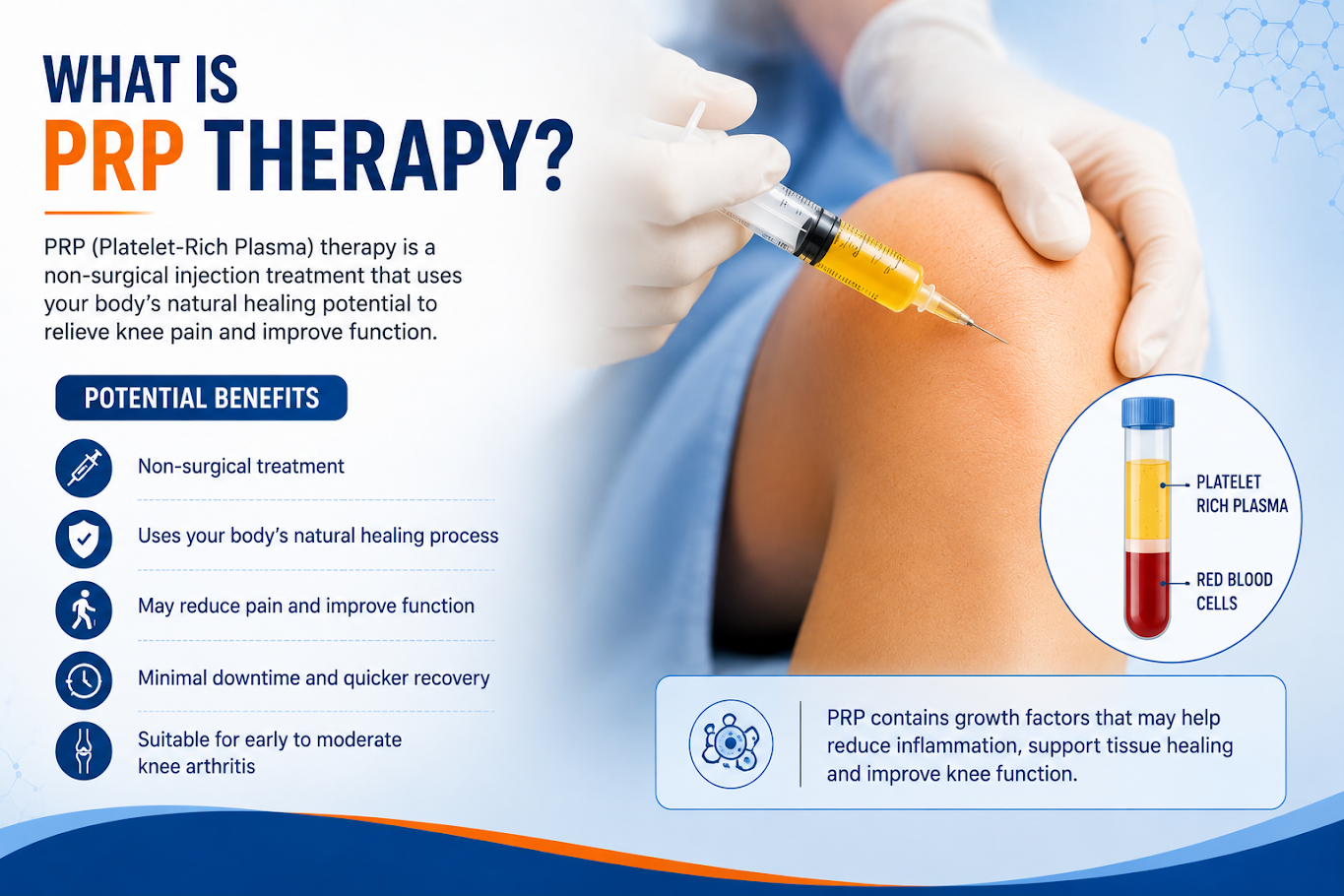
PRP, or platelet-rich plasma, is an injection treatment prepared from your own blood.
During the procedure, a small amount of blood is collected and processed to concentrate platelets in the plasma. The preparation is then injected into the affected area of the knee.
PRP has been studied as a treatment for symptomatic knee osteoarthritis. Some patients may experience improvements in pain and function, although results can vary between individuals.
What Are the Potential Benefits of PRP?
Patients may consider PRP because it is a non-surgical treatment.
Potential advantages include:
- No major surgery
- No artificial joint implant
- Injection-based treatment
- Less disruption compared with major surgery
- Potential improvement in pain and function in selected patients
However, PRP is not a guaranteed cure for knee arthritis.
It does not replace severely damaged joint surfaces and should not be viewed as equivalent to joint replacement surgery.
What Is Knee Replacement Surgery?
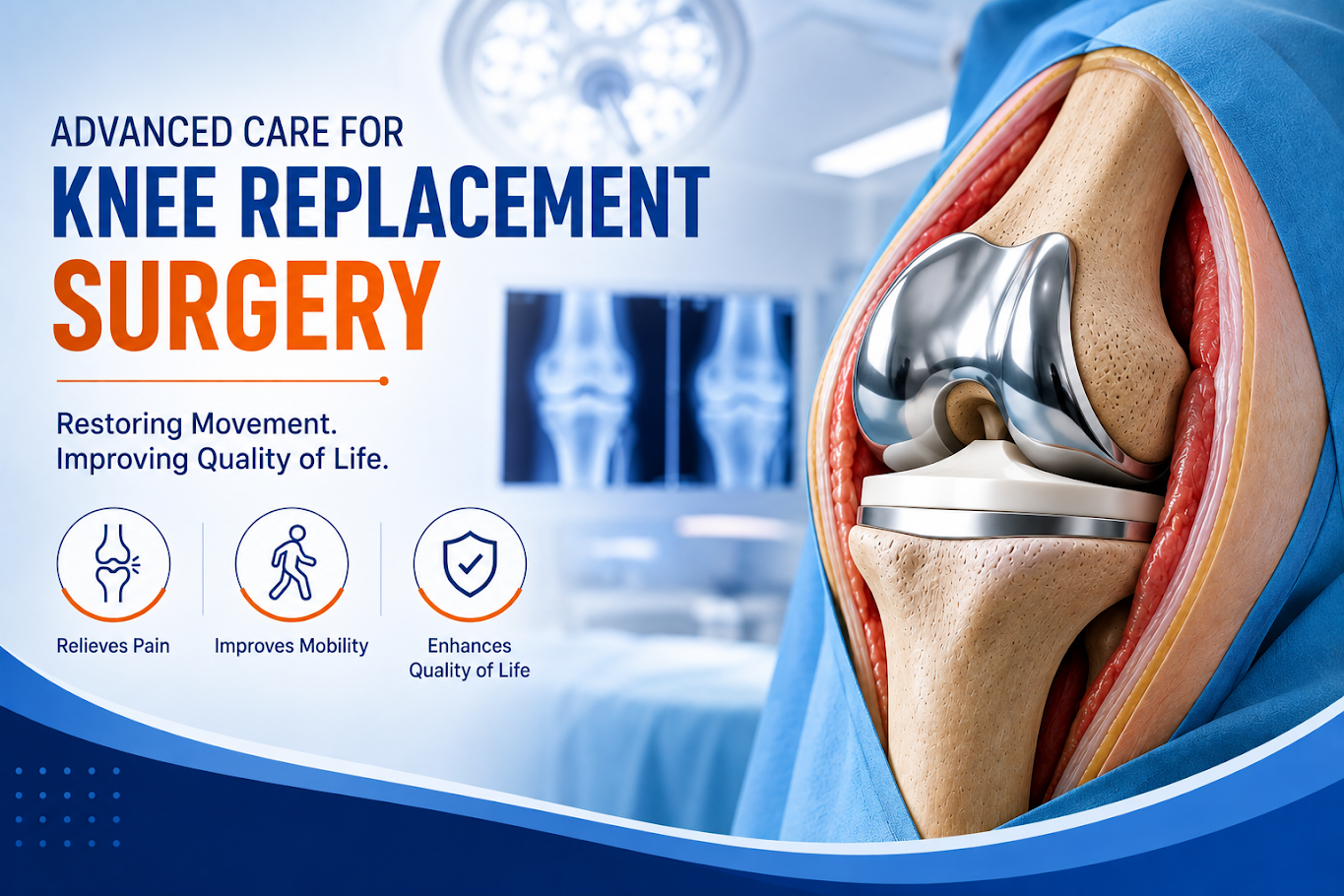
Knee replacement surgery involves replacing damaged portions of the knee joint with artificial components.
It is commonly considered for people with significant knee arthritis who experience persistent pain, stiffness and difficulty performing everyday activities despite appropriate non-surgical treatment.
Depending on the location and extent of joint damage, your orthopaedic surgeon may recommend total or partial knee replacement.
What Can Knee Replacement Help With?
For appropriately selected patients, knee replacement may help:
- Reduce chronic knee pain
- Improve walking ability
- Improve knee function
- Make everyday activities easier
- Improve quality of life
Unlike PRP, knee replacement directly addresses severely damaged joint surfaces by replacing them with prosthetic components.
PRP vs Knee Replacement: Which Is Better for Knee Arthritis?
There is no universal answer to PRP vs Knee Replacement because knee arthritis can range from mild symptoms to advanced joint destruction.
A patient with symptomatic arthritis but manageable joint damage may discuss non-surgical treatment options, including PRP, with an orthopaedic specialist.
A patient with advanced arthritis, severe pain, significant stiffness and major functional limitations despite appropriate non-surgical treatment may be evaluated for knee replacement.
Before choosing a treatment, it is important to understand the condition of your knee.
If you want to learn more about knee arthritis prevention and management, read our detailed guide: How to Prevent Knee Arthritis: A Complete Guide
When May PRP Be Considered?
PRP may be considered for selected patients with symptomatic knee osteoarthritis who are still suitable for non-surgical management.
Your doctor may consider:
- Severity of knee pain
- Degree of joint damage
- Range of movement
- Age and activity level
- Previous treatments
- Overall health
- Treatment goals
PRP may be discussed as part of a broader non-surgical treatment plan.
However, having knee arthritis does not automatically mean that PRP is necessary or appropriate.
When May Knee Replacement Be Considered?
The decision between PRP vs Knee Replacement becomes particularly important when knee arthritis starts significantly affecting quality of life.
Knee replacement may be considered when:
Persistent Knee Pain
Pain that continues despite appropriate treatment can interfere with walking, work, exercise and normal daily activities.
Difficulty Walking
If you can no longer walk comfortably or need frequent breaks because of knee pain, your condition may require further assessment.
Difficulty Climbing Stairs
Severe pain or stiffness while climbing or descending stairs can indicate significant functional limitations.
Sleep Disturbance
Knee pain that regularly interferes with sleep can have a substantial effect on physical and emotional well-being.
Loss of Daily Function
If shopping, travelling, exercising, household activities or spending time with family have become difficult because of your knee, treatment options may need to be reassessed.
Non-Surgical Treatment Is No Longer Enough
If physiotherapy, exercise, medication, lifestyle modifications or other appropriate treatments have not provided adequate relief, your surgeon may discuss whether knee replacement is appropriate.
PRP vs Knee Replacement for Early Knee Arthritis
For patients with early or less advanced knee arthritis, surgery may not be the immediate treatment goal.
Depending on the individual, treatment may include physiotherapy, exercise, activity modification, medication and weight management where appropriate.
PRP may also be discussed for selected patients.
The important point is that PRP is not automatically better simply because it does not involve surgery. Treatment should match the severity of the disease and the patient's individual needs.
If you are experiencing early symptoms, understanding how to protect your joints can also be helpful.
PRP vs Knee Replacement for Advanced Knee Arthritis
The situation can be very different when arthritis becomes advanced.
Severe cartilage loss, narrowing of the joint space, stiffness, deformity and persistent pain can make normal movement increasingly difficult.
At this stage, an injection cannot replace severely damaged joint surfaces.
If pain and disability remain significant despite appropriate non-surgical treatment, knee replacement may become a more appropriate option.
Can PRP Delay Knee Replacement?
One of the most common questions about PRP vs Knee Replacement is whether PRP can delay or prevent surgery.
There is no guarantee that PRP will prevent the need for knee replacement.
If PRP provides meaningful symptom relief for an appropriate patient, it may help manage symptoms for a period of time. However, knee arthritis can continue to progress, and some patients may eventually require surgery.
The goal should not simply be to avoid surgery at all costs. The goal is to choose the treatment that is appropriate for the condition of your knee and your long-term goals.
PRP Injection Recovery vs Knee Replacement Recovery
Recovery is another major difference when comparing PRP vs Knee Replacement.
PRP is an injection-based treatment, so recovery is generally less extensive than recovery following major knee surgery. Your doctor will provide specific instructions regarding activity, exercise and follow-up.
Knee replacement requires a more structured recovery process.
Patients may require:
- Postoperative monitoring
- Pain management
- Physiotherapy
- Walking rehabilitation
- Strengthening exercises
- Follow-up appointments
Recovery varies between individuals. Your surgeon will provide a rehabilitation plan based on your procedure, health and progress.
When Is Knee Replacement Necessary?
Understanding when knee replacement is necessary is more useful than choosing between PRP and surgery based solely on personal preference.
Knee replacement may be considered when:
- Knee pain is persistent or severe
- Walking ability has significantly decreased
- Daily activities are affected
- Sleep is disturbed
- Knee movement is restricted
- Joint damage is advanced
- Quality of life has declined
- Non-surgical treatment no longer provides sufficient relief
The decision should be based on your symptoms, physical examination, imaging, treatment history and overall health.
Age alone does not determine whether someone needs knee replacement.
Is Robotic Knee Replacement an Option?
If knee replacement is recommended, robotic-assisted knee replacement may be one option your surgeon discusses with you.
Robotic technology can assist with surgical planning and help the surgeon execute the planned procedure. The surgeon remains responsible for the operation and determines the appropriate surgical approach.
Whether robotic-assisted knee replacement is suitable depends on factors such as your knee anatomy, joint damage, treatment plan and overall health.
If you are considering knee replacement, read our comprehensive cornerstone guide: Robotic Knee Replacement in Mysore: Complete Guide
The guide provides additional information about robotic knee replacement, preparation, the procedure and recovery.
Questions to Ask Your Orthopaedic Surgeon
Before deciding between PRP vs Knee Replacement, discuss your options carefully with your orthopaedic specialist.
Useful questions include:
- How advanced is my knee arthritis?
- What does my X-ray show?
- Is PRP suitable for my condition?
- What results can I realistically expect from PRP?
- Have other non-surgical treatments been adequately tried?
- Is knee replacement appropriate at this stage?
- What are my alternatives?
- Would robotic-assisted knee replacement be suitable for me?
A personalised assessment is more useful than choosing a treatment based only on online information.
PRP vs Knee Replacement: Which Treatment Is Right for You?
The answer to PRP vs Knee Replacement depends largely on the severity of your knee condition.
PRP may be an option for selected patients with symptomatic knee osteoarthritis who are still suitable for non-surgical treatment. It may provide symptom relief, but it does not replace severely damaged joint surfaces.
Knee replacement may be appropriate for patients with advanced knee arthritis, persistent pain and significant limitations despite appropriate non-surgical treatment.
Therefore, there is no universal winner.
The right treatment is the one that is appropriate for your knee, your symptoms, your treatment history and your individual goals.
If knee pain is affecting your walking, sleep, work, travel or everyday activities, consult an experienced orthopaedic specialist for a detailed evaluation.
Conclusion: PRP vs Knee Replacement
PRP vs Knee Replacement is not simply a choice between an injection and surgery. These treatments are intended for different situations and different stages of knee disease.
PRP may be considered for selected patients who still have an appropriate non-surgical treatment pathway. Knee replacement may be considered when advanced arthritis causes persistent pain, reduced mobility and significant quality-of-life problems despite appropriate treatment.
If you are unsure which option is right for you, do not make the decision based only on pain severity or online comparisons.
Get your knee evaluated by an orthopaedic specialist and discuss the treatment option that best matches your condition and goals.
Frequently Asked Questions About PRP vs Knee Replacement
Neither treatment is universally better. PRP may suit selected patients with symptomatic knee arthritis, while knee replacement may be appropriate for advanced disease with significant pain and functional limitations.
No. PRP does not replace damaged joint surfaces. It may help manage symptoms in selected patients, while knee replacement replaces damaged portions of the joint.
PRP may provide symptom relief for some patients and potentially postpone surgery, but it cannot guarantee that knee replacement will never be needed.
PRP may be less suitable when there is severe structural joint damage. An orthopaedic evaluation can determine whether PRP or another treatment is appropriate.
Knee replacement may be considered when persistent pain and functional limitations significantly affect quality of life and appropriate non-surgical treatments no longer provide sufficient relief.
Recovery varies between patients. Rehabilitation usually begins soon after surgery, while fuller recovery can take several months depending on individual circumstances.
Robotic assistance is a surgical technology rather than a guarantee of better results for every patient. Your surgeon can determine whether it is appropriate for your condition.
Start with a detailed orthopaedic evaluation. Your doctor can assess your symptoms, imaging, joint damage and previous treatments before recommending the most appropriate option.