
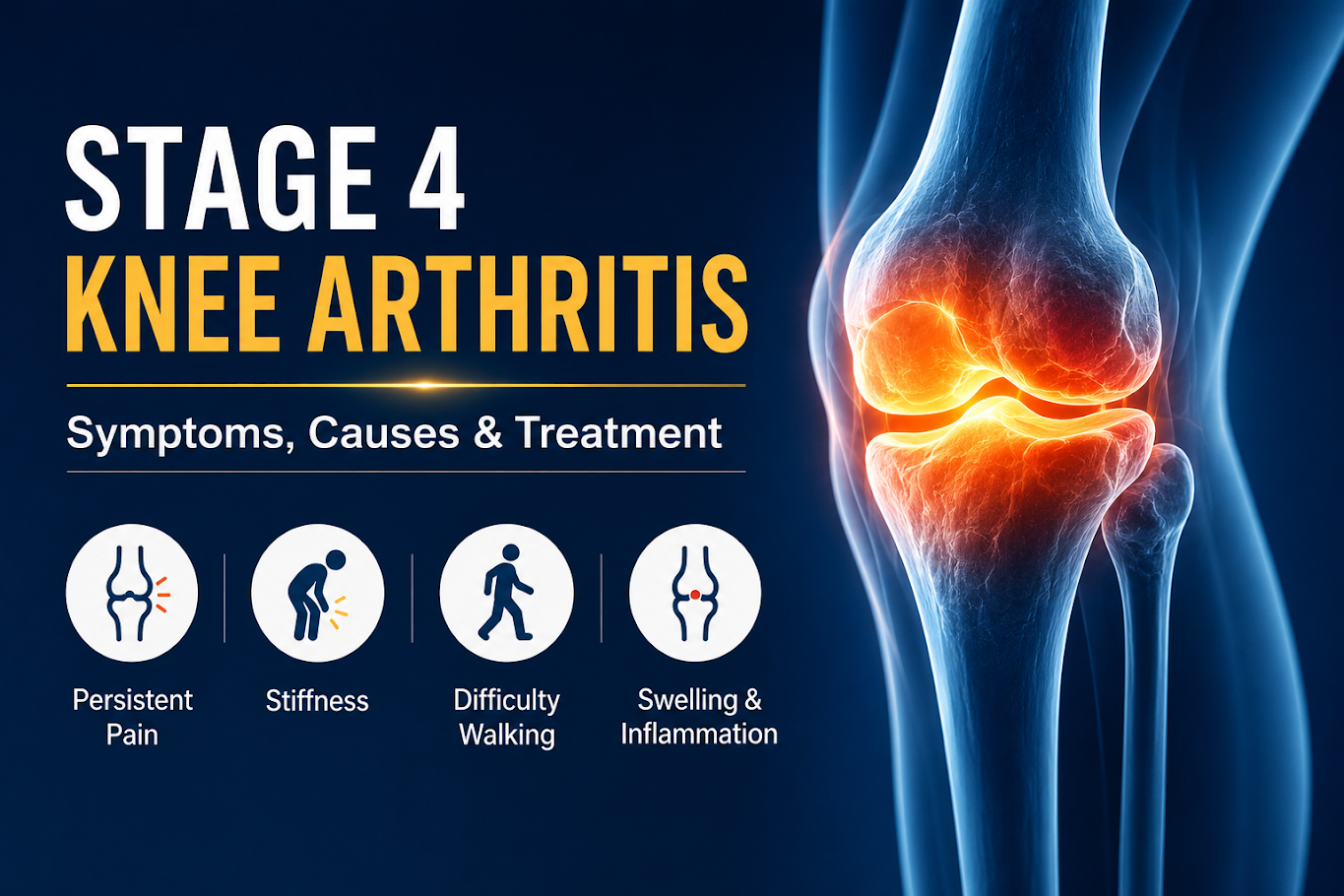
Knee arthritis can gradually affect your ability to walk, climb stairs, exercise, and perform everyday activities. While early-stage arthritis may be managed with lifestyle changes and non-surgical treatments, advanced arthritis can cause persistent pain and significant loss of joint function.
Stage 4 knee arthritis is considered the most advanced stage of knee osteoarthritis. At this stage, the cartilage protecting the knee joint is severely worn down or almost completely lost. This can cause bones to rub against each other, resulting in pain, stiffness, swelling, and difficulty with movement.
Understanding the symptoms, causes, and available treatment options can help you make informed decisions about your knee health.
What Is Stage 4 Knee Arthritis?
Stage 4 knee arthritis refers to severe, advanced osteoarthritis in which there is extensive damage to the cartilage inside the knee joint.
Healthy knees have smooth cartilage covering the ends of the thigh bone (femur) and shin bone (tibia). This cartilage allows the bones to move smoothly while absorbing shock.
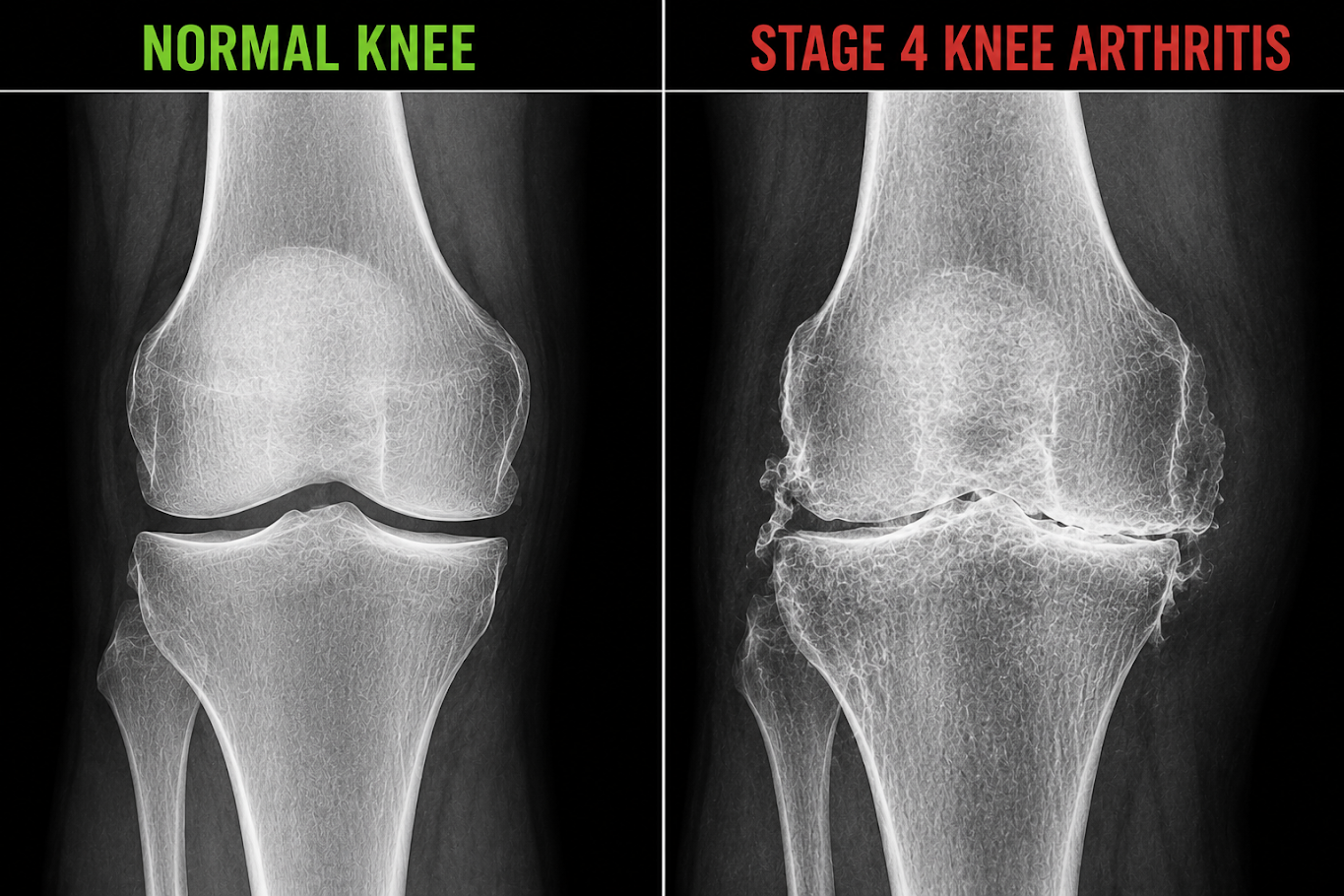
As osteoarthritis progresses, the cartilage gradually becomes thinner and damaged. In the most advanced stage, much of the cartilage may be gone. X-rays may show very narrow or absent joint space, bone spurs, and other signs of joint degeneration.
Although imaging findings are important, treatment decisions are not based on an X-ray alone. Your symptoms, physical examination, mobility, age, activity level, and overall health also matter.
Symptoms of Stage 4 Knee Arthritis
Symptoms can become more noticeable and persistent as knee arthritis reaches an advanced stage.
1. Persistent Knee Pain
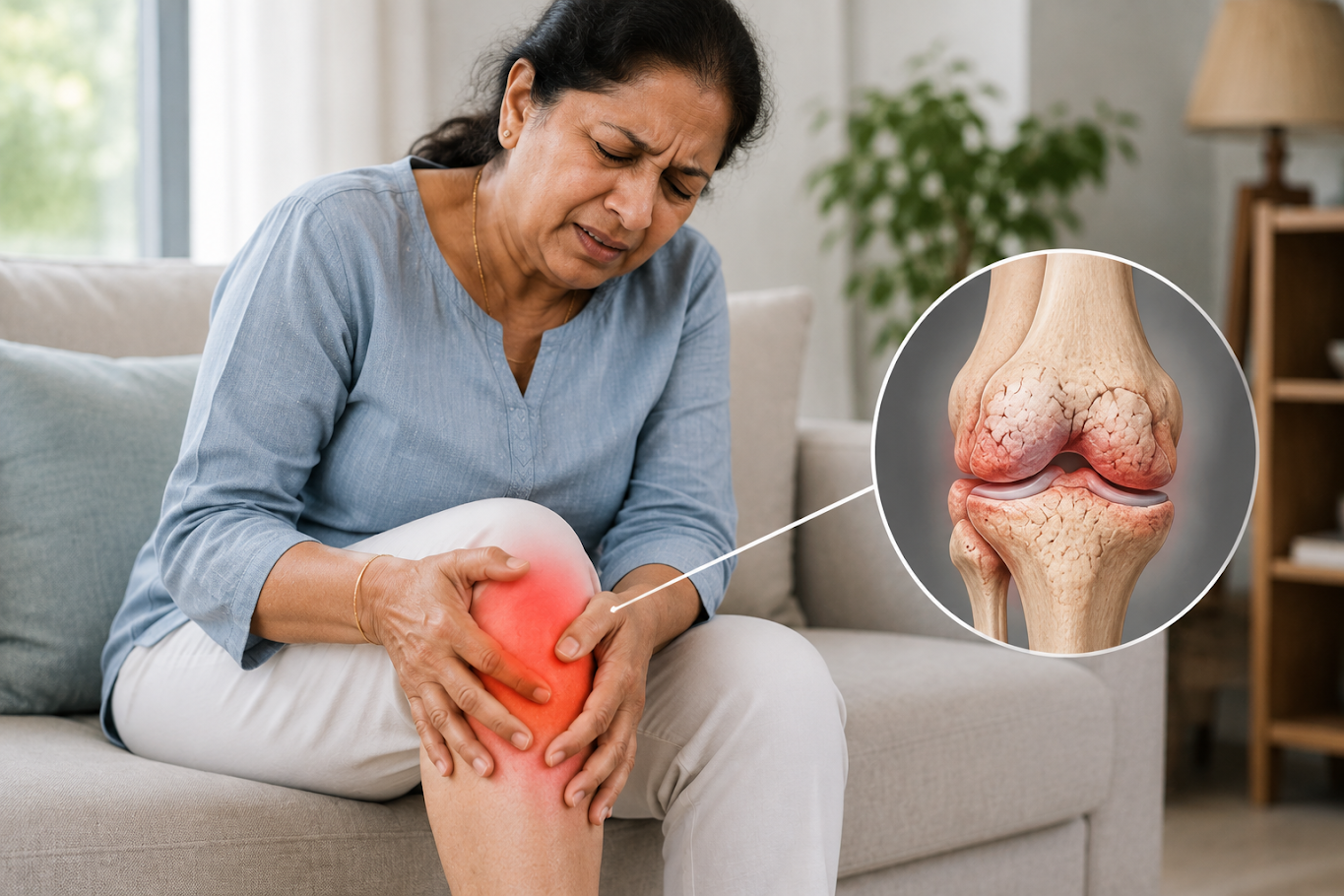
Pain may occur during walking, standing, climbing stairs, or getting up from a chair. In advanced arthritis, discomfort may also occur while resting or sleeping.
The pain can vary from person to person, but persistent pain that interferes with daily activities is an important warning sign.
2. Severe Stiffness
You may find it difficult to fully bend or straighten your knee. Stiffness can be particularly noticeable after waking up or sitting for a long period.
Reduced flexibility can make simple activities such as putting on shoes, getting into a car, or using stairs more difficult.
3. Difficulty Walking
Advanced arthritis can significantly affect walking ability. You may start walking more slowly, avoid longer distances, or depend on a walking stick or another support.
Some people develop an altered walking pattern because they are trying to reduce pressure on the painful knee.
4. Swelling and Inflammation
A severely arthritic knee may become swollen, particularly after physical activity. Inflammation inside the joint can contribute to pain, stiffness, and reduced movement.
5. Grinding or Clicking Sensation
Some people experience a grinding, clicking, or catching sensation when moving the knee. This can occur because the smooth joint surfaces have become irregular due to cartilage loss and degeneration.
6. Knee Deformity
In advanced cases, changes in the alignment of the knee can become visible. The legs may gradually develop a bow-legged or knock-kneed appearance depending on which parts of the joint are most affected.
7. Reduced Quality of Life
Perhaps the most important symptom is the effect on everyday life. You may stop participating in activities you previously enjoyed because of pain or limited mobility.
What Causes Stage 4 Knee Arthritis?
Osteoarthritis develops through a combination of age-related changes, joint stress, previous injuries, and individual risk factors.
Common causes and risk factors include:
- Increasing age
- Previous knee injuries
- Meniscus or ligament damage
- Previous knee surgery
- Excess body weight
- Repetitive stress on the knee
- Poor lower-limb alignment
- Certain metabolic or joint conditions
- Family history of osteoarthritis
- Weakness of the muscles supporting the knee
However, having one or more risk factors does not necessarily mean you will develop severe arthritis.
How Is Stage 4 Knee Arthritis Diagnosed?
Diagnosis usually begins with a detailed discussion about your symptoms and medical history.
Your orthopaedic specialist may assess:
- Pain and its duration
- Walking ability
- Knee movement
- Joint stability
- Alignment of the leg
- Swelling and tenderness
- Muscle strength
- Effect of symptoms on daily activities
X-rays and Imaging
Standing X-rays are commonly used to evaluate the extent of arthritis. They can reveal:
- Loss of joint space
- Bone spurs
- Changes in bone structure
- Abnormal alignment
- Advanced cartilage loss
MRI scans are not always necessary for diagnosing advanced osteoarthritis. They may be recommended in selected cases when additional information about the soft tissues is required.
Can Stage 4 Knee Arthritis Be Treated Without Surgery?
Treatment depends on the severity of symptoms and how much the condition affects your daily life.
Non-surgical treatment may still provide symptom relief in some people, although advanced arthritis may respond less effectively than earlier stages.
Exercise and Physiotherapy
A structured exercise program can help strengthen the muscles around the knee and improve flexibility and mobility.
Commonly recommended exercises may include:
- Quadriceps strengthening
- Hamstring stretching
- Straight-leg raises
- Low-impact aerobic exercises
- Range-of-motion exercises
A physiotherapist can develop an exercise program based on your condition and physical ability.
Weight Management
If you are overweight, even moderate weight reduction can reduce stress on the knee joint.
Maintaining a healthy weight can also make physical activity easier and may improve overall mobility.
Pain-Relieving Medication
Depending on your health and medical history, your doctor may recommend medications to manage pain and inflammation.
Medication should be taken according to medical advice, particularly if you have other medical conditions or are already taking other medicines.
Injections
Certain patients may benefit from injections into the knee joint. Depending on the individual situation, options may include corticosteroid injections or other injectable treatments.
The effectiveness and duration of relief can vary considerably between patients.
Walking Aids
A walking stick, walker, or other appropriate support may help reduce stress on the knee and improve safety while walking.
However, walking aids should ideally be selected and adjusted with professional guidance.
When Is Surgery Considered?
If advanced arthritis causes persistent pain and significantly restricts daily activities despite appropriate non-surgical treatment, surgery may be considered.
A knee replacement procedure may be recommended when:
- Pain is persistent or severe
- Walking has become difficult
- Everyday activities are significantly restricted
- Sleep is affected by knee pain
- Conservative treatments no longer provide adequate relief
- X-rays show advanced joint degeneration
- The overall condition of the knee is suitable for surgery
The decision should be individualized rather than based only on the arthritis stage.
Robotic Knee Replacement for Advanced Arthritis
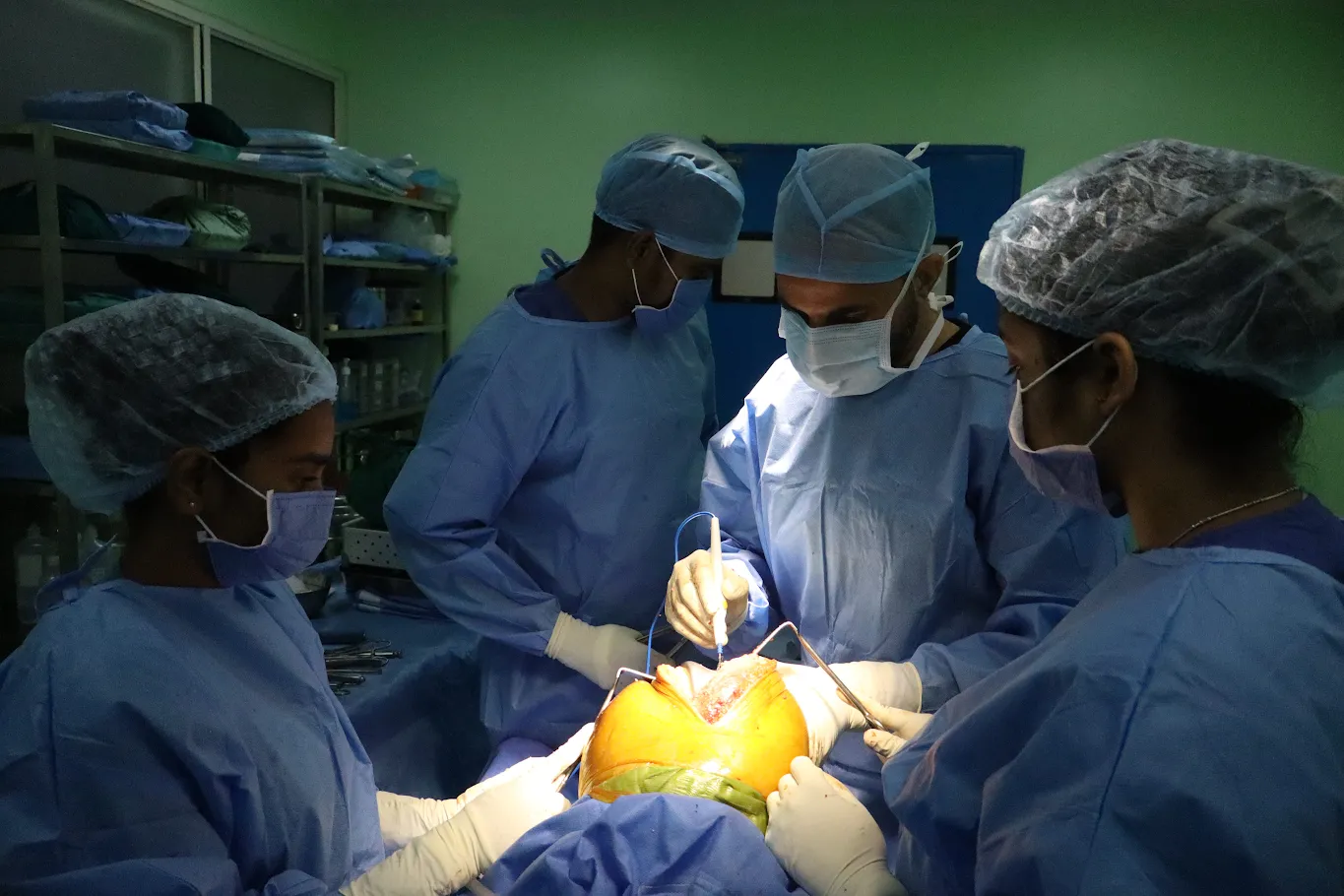
For suitable patients with advanced knee arthritis, robotic-assisted knee replacement may be one treatment option.
During knee replacement, damaged portions of the joint are removed and replaced with artificial components. Robotic-assisted technology can help the surgical team plan the procedure and assist with bone preparation and implant positioning.
However, robotic assistance does not mean the procedure is performed independently by a robot. The orthopaedic surgeon remains responsible for planning and performing the surgery.
If you are considering this treatment, learn more in our detailed guide: Robotic Knee Replacement in Mysore: Complete Guide.
What Happens If Stage 4 Knee Arthritis Is Left Untreated?
Severe arthritis does not necessarily mean that surgery must be performed immediately. However, ongoing symptoms can progressively affect mobility and quality of life.
Possible consequences include:
- Reduced physical activity
- Muscle weakness
- Difficulty walking
- Increased dependence on walking aids
- Sleep disturbance
- Difficulty performing daily activities
- Reduced participation in social or recreational activities
Avoiding movement completely can also contribute to muscle weakness, which may further affect mobility.
This is why an individualized treatment plan is important, even when surgery is not immediately being considered.
How Can You Manage Advanced Knee Arthritis?
While severe cartilage damage cannot simply be reversed through lifestyle changes, several measures can help you maintain mobility and manage symptoms.
Stay Physically Active
Choose low-impact activities that are comfortable for your knees. Swimming, cycling, walking at an appropriate pace, and supervised strengthening exercises may be suitable for some patients.
Strengthen the Muscles Around the Knee
Strong quadriceps, hamstrings, and hip muscles can provide better support for the knee and improve functional movement.
Avoid Activities That Aggravate Pain
High-impact activities that repeatedly worsen your symptoms may need to be modified.
Maintain a Healthy Weight
Reducing excess weight can decrease the mechanical load placed on the knee during everyday movement.
Get Professional Assessment
If pain is persistent or affecting your daily life, consult an orthopaedic specialist rather than relying solely on home remedies or painkillers.
Can Stage 4 Knee Arthritis Be Reversed?
Advanced osteoarthritis cannot usually be reversed because damaged cartilage does not naturally grow back to its original condition.
However, symptoms can often be managed, and treatment can help improve mobility and quality of life.
The appropriate approach depends on the individual. Some patients may continue with non-surgical treatment, while others with severe pain and functional limitations may benefit from knee replacement surgery.
When Should You See an Orthopaedic Specialist?
Consider getting an evaluation if you experience:
- Persistent knee pain
- Difficulty walking
- Increasing stiffness
- Recurrent swelling
- Pain that interferes with sleep
- Difficulty climbing stairs
- Reduced ability to perform daily activities
- A noticeable change in knee alignment
Early professional assessment can help identify the severity of arthritis and determine an appropriate treatment strategy.
Conclusion
Stage 4 knee arthritis represents advanced degeneration of the knee joint and can have a substantial impact on mobility and everyday life. Severe pain, stiffness, swelling, reduced movement, difficulty walking, and changes in knee alignment are common features.
Although advanced arthritis cannot usually be reversed, treatment can help manage symptoms and improve function. Exercise, physiotherapy, weight management, medications, injections, and walking aids may provide relief for some patients. When pain and disability become significant despite conservative treatment, knee replacement may be considered.
The best treatment is different for every patient. A detailed orthopaedic assessment, combined with clinical examination and appropriate imaging, can help determine the most suitable option.
For patients exploring advanced surgical treatment, our Robotic Knee Replacement in Mysore: Complete Guide provides additional information about the procedure, recovery, and what to expect.
Frequently Asked Questions
It is the most advanced stage of knee osteoarthritis, usually involving severe cartilage loss, significant joint-space narrowing, bone changes, and substantial symptoms.
Non-surgical treatments can help manage symptoms, but their effectiveness varies. Some patients with advanced arthritis may eventually require surgery if pain and disability remain significant.
No. The decision depends on symptoms, mobility, overall health, imaging findings, and how much arthritis affects your quality of life. The arthritis stage alone does not determine the need for surgery.
Yes. Appropriate strengthening and low-impact exercises can improve muscle strength, flexibility, and mobility. Exercises should be tailored to your condition, particularly when arthritis is severe.
You should consider an evaluation if knee pain, stiffness, swelling, or difficulty walking is persistent or begins interfering with sleep and everyday activities.