
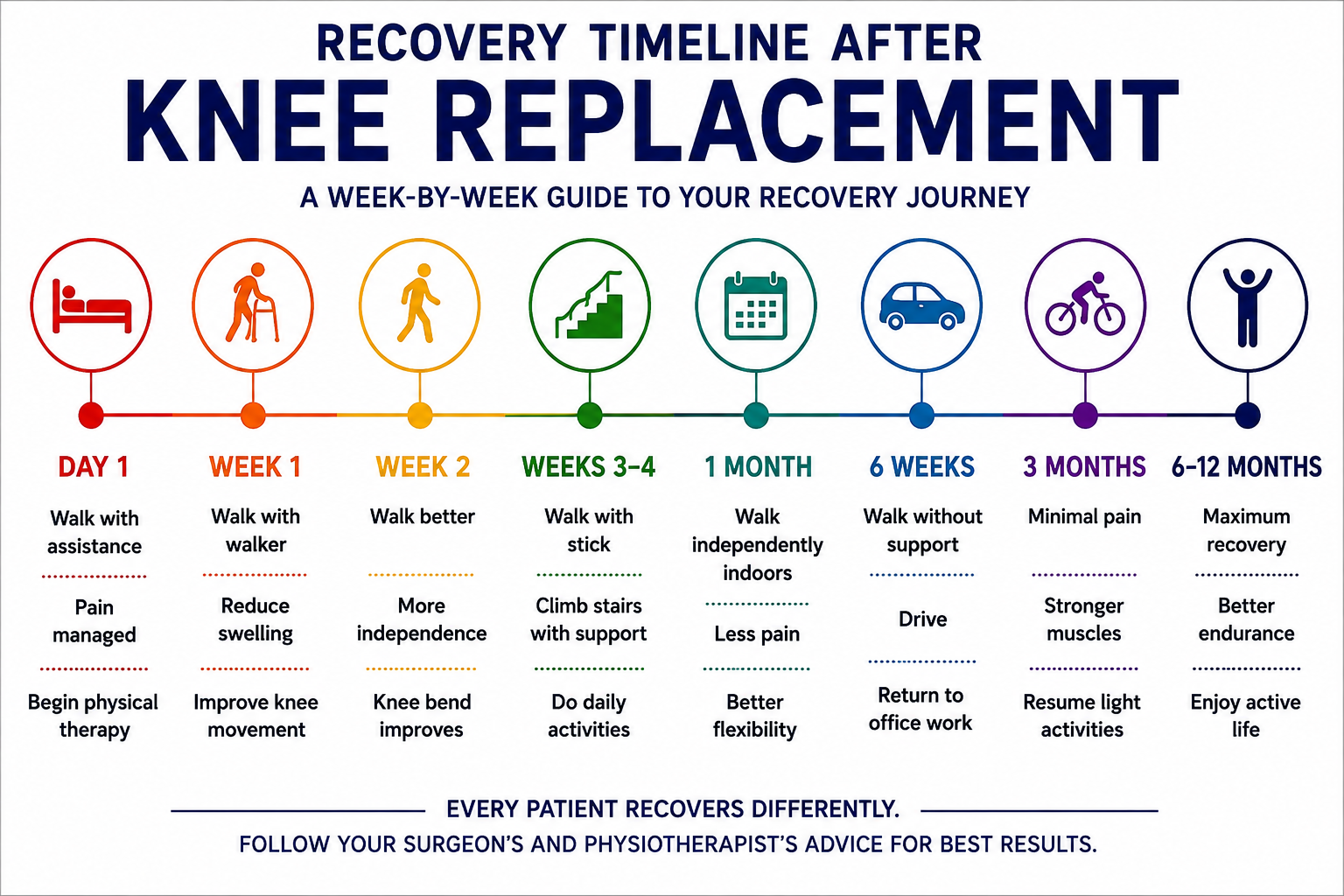
Knee replacement surgery is one of the most successful orthopedic procedures for people suffering from severe knee arthritis, chronic pain, and reduced mobility. While the surgery itself can dramatically improve quality of life, the recovery journey is equally important for achieving the best possible results.
Many patients ask:
- How long does knee replacement recovery take?
- When can I walk normally?
- When can I climb stairs?
- When can I drive?
- When can I return to work?
The answer varies depending on age, overall health, muscle strength, commitment to physiotherapy, and whether robotic-assisted knee replacement was performed.
This guide explains the complete recovery timeline after knee replacement surgery, helping patients understand what to expect during each stage of healing.
Understanding Knee Replacement Recovery
During knee replacement surgery, the damaged cartilage and worn-out surfaces of the knee joint are replaced with artificial implants.
Although patients often experience immediate pain relief from arthritis, the body still needs time to heal:
- Bone healing
- Soft tissue healing
- Muscle strengthening
- Balance restoration
- Joint flexibility improvement
Recovery is gradual and continues for several months.
Immediate Recovery: Day of Surgery
Most patients are encouraged to stand and walk on the same day of surgery.
What Happens?
- Pain medications begin
- Ice therapy reduces swelling
- Physiotherapist starts exercises
- Walking begins with support
- Knee bending exercises start
Goals
- Prevent blood clots
- Improve circulation
- Restore movement
- Reduce stiffness
Week 1 Recovery
The first week focuses on reducing pain and beginning mobility.
Expected Progress
- Walking with walker
- Controlled pain using medication
- Swelling around knee
- Daily physiotherapy
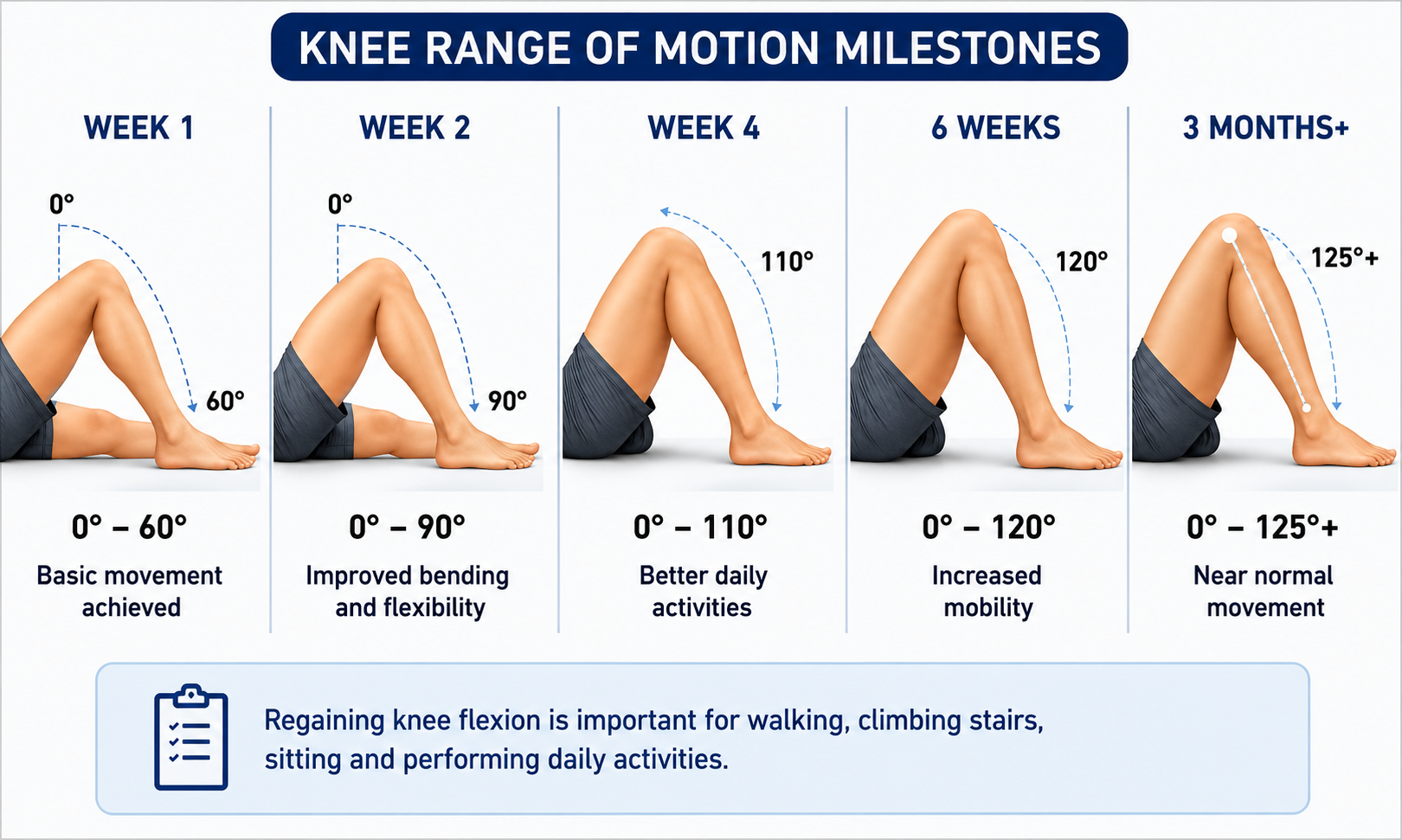
- Knee bending reaches around 60–90 degrees
Exercises
- Ankle pumps
- Quadriceps sets
- Straight leg raises
- Heel slides
Patients are usually discharged within 2–4 days depending on recovery.
Week 2 Recovery
During the second week, confidence improves significantly.
Improvements
- Better walking
- Less swelling
- Improved sleep
- Increased knee movement
- Better independence
Many patients begin walking longer distances inside the house.
Goals
- Bend knee beyond 90°
- Walk safely
- Improve muscle strength
Weeks 3–4 Recovery
This period often marks noticeable improvements.
Patients usually:
- Walk using a walking stick
- Climb stairs with support
- Perform household activities
- Experience reduced pain
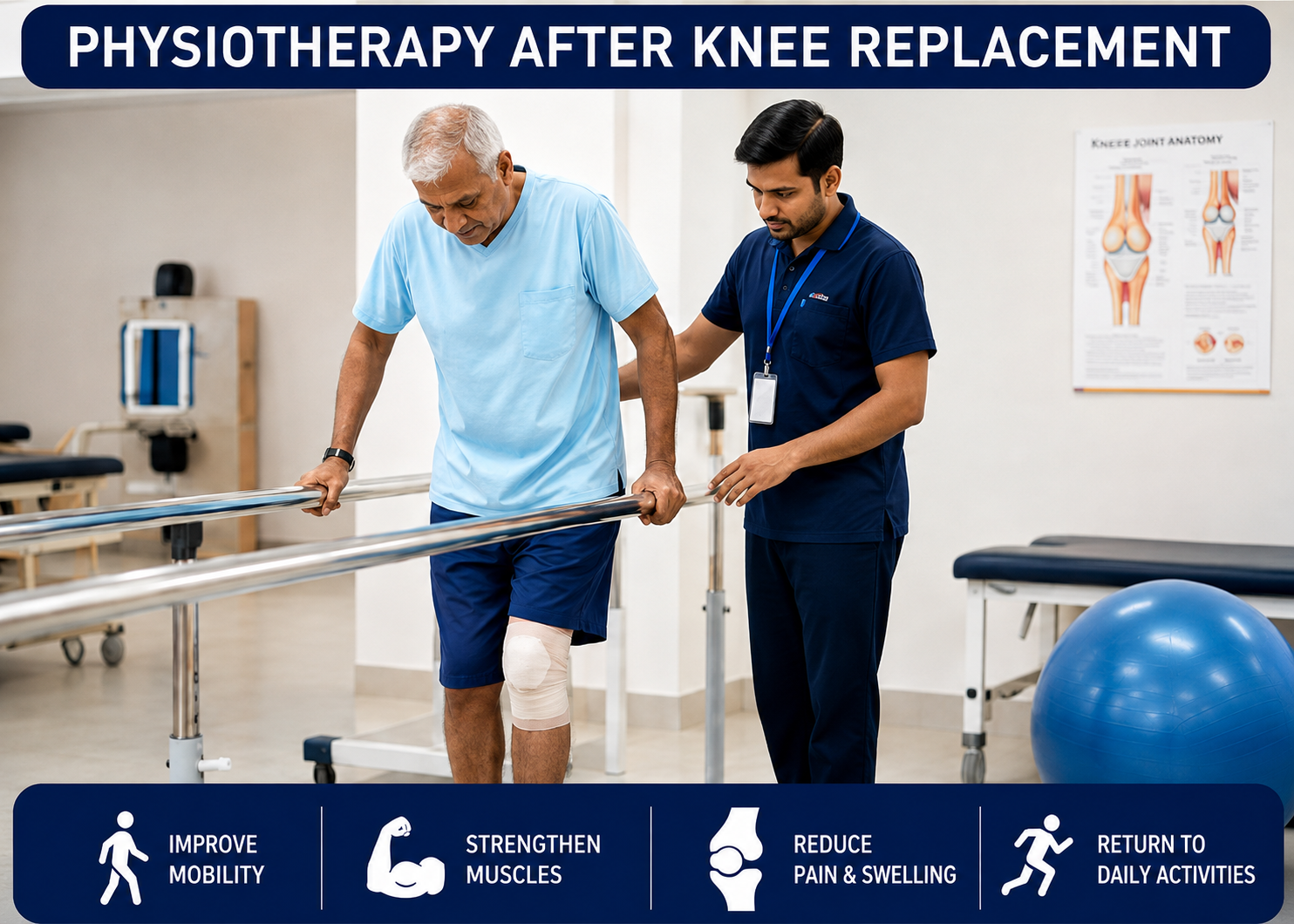
Physiotherapy focuses on:
- Muscle strengthening
- Walking pattern correction
- Balance exercises
- Flexibility
One Month After Surgery
By one month, most patients can:
- Walk independently indoors
- Sit comfortably
- Sleep better
- Perform basic daily activities
Swelling may still persist, especially after prolonged walking. This is completely normal.
Six Weeks Recovery
Around six weeks, patients often:
- Walk without support
- Drive (if cleared by the surgeon)
- Return to desk jobs
- Walk longer distances
Knee bending usually reaches 110–120 degrees. Pain becomes significantly lower than before surgery.
Two Months Recovery
At two months, strength continues improving. Patients can:
- Shop independently
- Climb stairs more comfortably
- Walk outdoors confidently
- Perform light household work
Exercise becomes increasingly important.
Three Months Recovery
Three months is a major milestone. Most patients experience:
- Minimal pain
- Improved confidence
- Better knee flexibility
- Stronger muscles
- Nearly normal walking pattern
Many people resume gardening, light travel, recreational walking, and social activities.
Six Months Recovery
At six months, recovery is well advanced. Most patients report:
- Excellent pain relief
- Comfortable walking
- Improved balance
- Better endurance
- Significant quality-of-life improvement
Some stiffness after prolonged sitting may still occur.
One Year Recovery
Complete recovery can take up to one year. At this stage:
- Scar tissue fully matures
- Muscles regain strength
- Swelling almost completely resolves
- Knee feels more natural
- Maximum functional improvement is achieved
Physiotherapy Timeline
Physiotherapy is the most important part of recovery.
- Phase 1: Pain control, swelling reduction, walking training
- Phase 2: Knee bending, muscle activation, balance exercises
- Phase 3: Strength training, stair climbing, walking endurance
- Phase 4: Functional activities, sports-specific rehabilitation (if appropriate)
Patients who consistently perform exercises recover faster.
Pain During Recovery
Pain gradually decreases over time. Typical progression:
- Week 1: Moderate pain
- Week 2: Improving pain
- Month 1: Occasional discomfort
- Month 3: Minimal pain
- Month 6: Rare discomfort
Persistent or worsening pain should be evaluated by the orthopedic surgeon.
Managing Swelling
Swelling is common after knee replacement. Ways to reduce swelling:
- Ice packs
- Leg elevation
- Compression stockings
- Regular walking
- Physiotherapy
- Adequate hydration
Swelling may continue for several months. This is normal and improves gradually.
Nutrition for Faster Recovery
Healthy nutrition supports healing. Recommended foods:
- Protein-rich diet (eggs, fish, lentils, chicken)
- Fresh fruits rich in Vitamin C
- Green vegetables
- Milk and dairy products
- Nuts and seeds
- Whole grains
Drink plenty of water daily. Good hydration supports tissue repair and reduces inflammation.
Activities to Avoid During Recovery
Avoid the following activities, especially in early recovery:
- Squatting
- Sitting cross-legged (if advised by your surgeon)
- High-impact sports
- Running
- Jumping
- Heavy lifting
Always follow your surgeon's specific recommendations regarding activity restrictions.
Returning to Daily Activities
| Activity | Approximate Timeline |
|---|---|
| Walking with support | Same day |
| Climbing stairs | 2–4 weeks |
| Driving | 4–6 weeks |
| Office work | 4–8 weeks |
| Light household work | 6 weeks |
| Long-distance travel | 6–8 weeks |
| Golf | 3 months |
| Swimming | 6–12 weeks |
| Cycling | 6–10 weeks |
Signs of Normal Recovery
Normal recovery includes:
- Mild swelling
- Mild warmth around the knee
- Improving flexibility week by week
- Better walking each week
- Occasional stiffness after sitting
Warning Signs - Seek Medical Attention
Contact your surgeon immediately if you experience:
- Fever above 38°C
- Increasing redness around the wound
- Wound drainage or discharge
- Severe or sudden increase in swelling
- Calf pain or leg swelling (possible DVT)
- Chest pain or difficulty breathing
- Sudden inability to bear weight
Factors That Affect Recovery
Recovery speed and quality depend on several factors:
- Age and overall health
- Body weight
- Diabetes control
- Smoking status
- Pre-operative muscle strength
- Physiotherapy compliance
- Surgical technique used
- Implant positioning
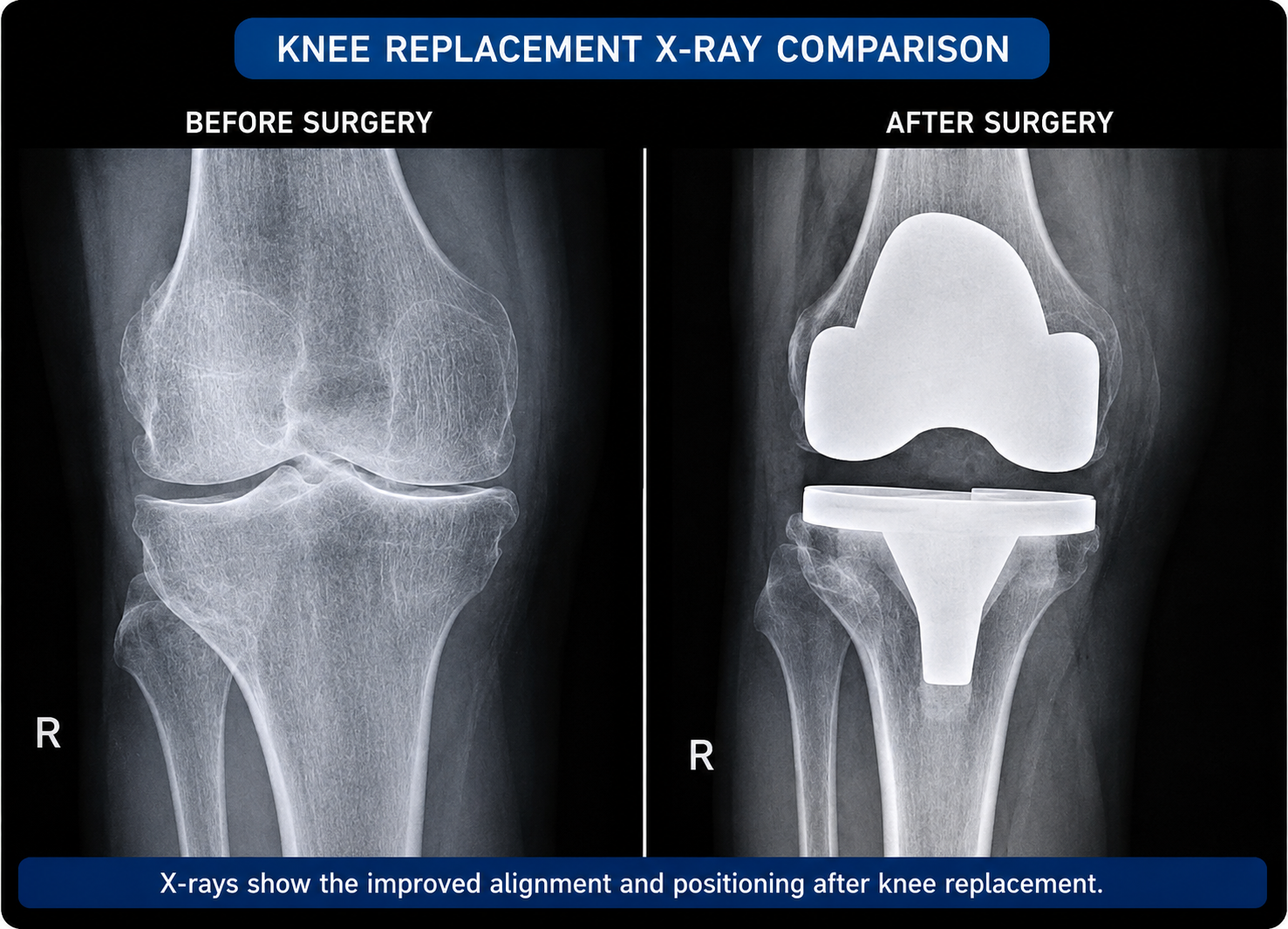
Robotic-assisted knee replacement may improve implant alignment and contribute to smoother functional recovery in appropriate patients.
Tips for Faster Recovery
- Follow physiotherapy exercises daily without skipping.
- Walk regularly as advised by your physiotherapist.
- Take all medications as prescribed.
- Maintain a healthy body weight.
- Eat a balanced, protein-rich diet.
- Sleep well and rest adequately.
- Stay well hydrated throughout the day.
- Attend all follow-up appointments with your surgeon.
Conclusion
Recovery after knee replacement is a gradual process, but each week brings meaningful progress. Most patients notice significant improvements within 6–12 weeks and continue gaining strength and mobility for up to a year.
With expert surgical care, dedicated physiotherapy, and healthy lifestyle habits, patients can return to an active, pain-free life. If you have questions about your recovery or are considering knee replacement surgery, consult Dr. Madhuram Chowdry for personalised guidance.
Frequently Asked Questions (FAQs)
Most patients experience significant improvement within 6-12 weeks. However, complete recovery - including full muscle strength and scar tissue maturation - can take up to 12 months.
Most patients walk with a walker on the day of surgery. By 6 weeks, many walk without any support. A near-normal walking pattern is typically restored by 3 months.
Driving is generally permitted around 4–6 weeks after surgery, but only when your surgeon has cleared you. This depends on which knee was operated and your ability to react quickly.
For desk jobs, patients can typically return in 4–8 weeks. Jobs requiring standing or physical activity may require 3 months or more.
Yes, absolutely. Physiotherapy is the most critical component of recovery. Patients who follow their physiotherapy programme consistently recover faster and achieve better long-term outcomes.
Some degree of swelling is completely normal and can persist for several months. It usually reduces gradually with elevation, ice, and physiotherapy. Sudden or severe swelling should be reported to your surgeon.
Most patients begin climbing stairs with support around 2–4 weeks after surgery. As strength improves, stair climbing becomes easier and more confident.
Robotic-assisted knee replacement offers more precise implant positioning, which may contribute to better functional outcomes and smoother recovery in appropriate patients.