
A knee replacement can dramatically improve mobility, reduce chronic pain, and help people return to many everyday activities. However, one of the most common questions patients ask before undergoing surgery is:
“How long does a knee implant last?”
In general, a modern knee replacement implant can last 15 to 20 years or more, and many implants continue functioning well beyond 20 years. The exact lifespan depends on several factors, including the patient's age, activity level, body weight, implant design, surgical technique, bone quality, overall health, and how well the implant is cared for after surgery.
According to the American Academy of Orthopaedic Surgeons (AAOS), more than 90% of modern total knee replacements are still functioning well 15 years after surgery. The NHS also states that many knee replacements last 20 years or more.
This does not mean that every knee implant automatically needs to be replaced after 15 or 20 years. Some implants last much longer, while others may require revision surgery earlier due to complications, injury, infection, or excessive wear.
What Is a Knee Implant?
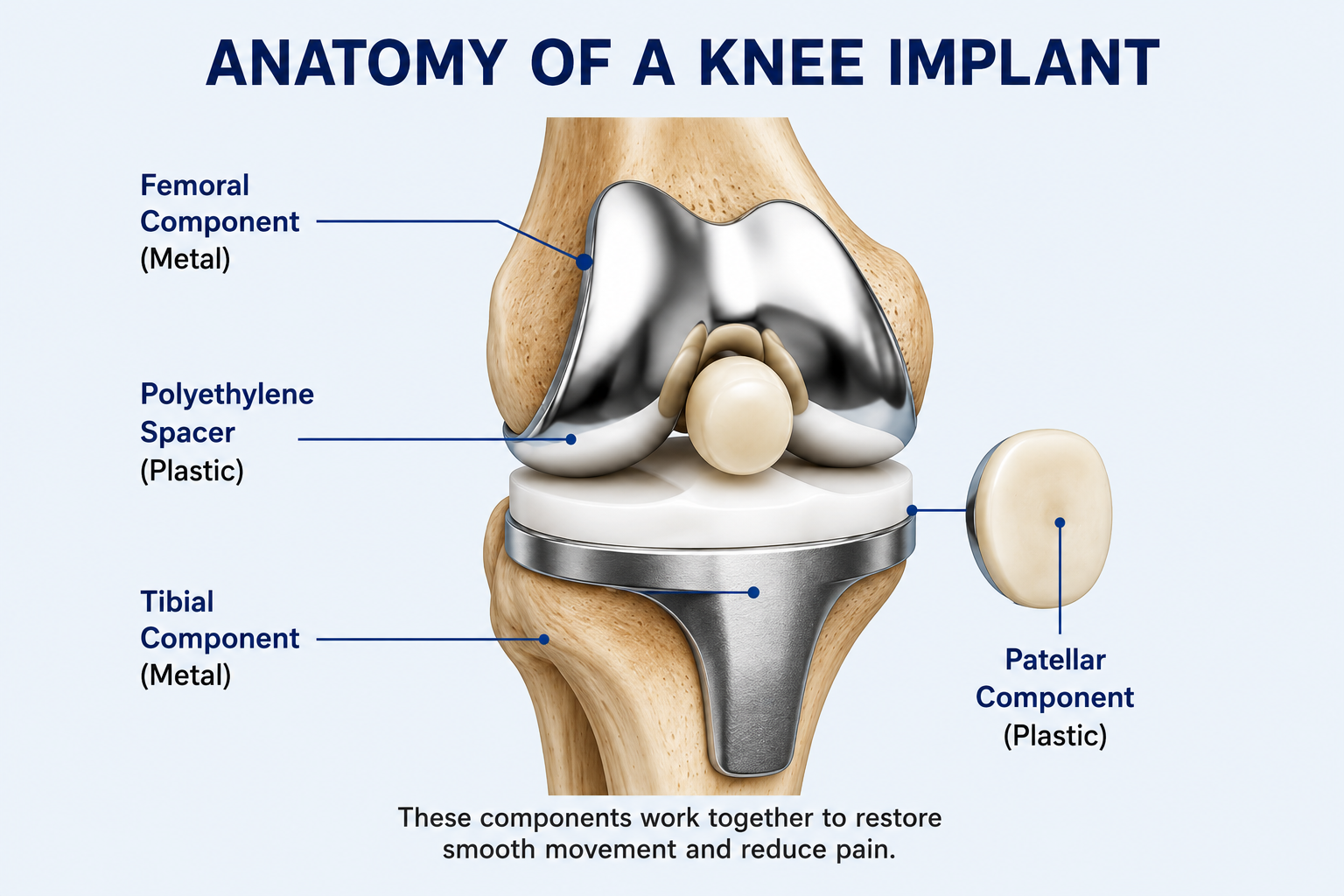
A knee implant, also called a knee prosthesis, is an artificial joint used during knee replacement surgery. It replaces the damaged surfaces of the knee joint that are causing pain and restricting movement.
A typical total knee replacement consists of several components:
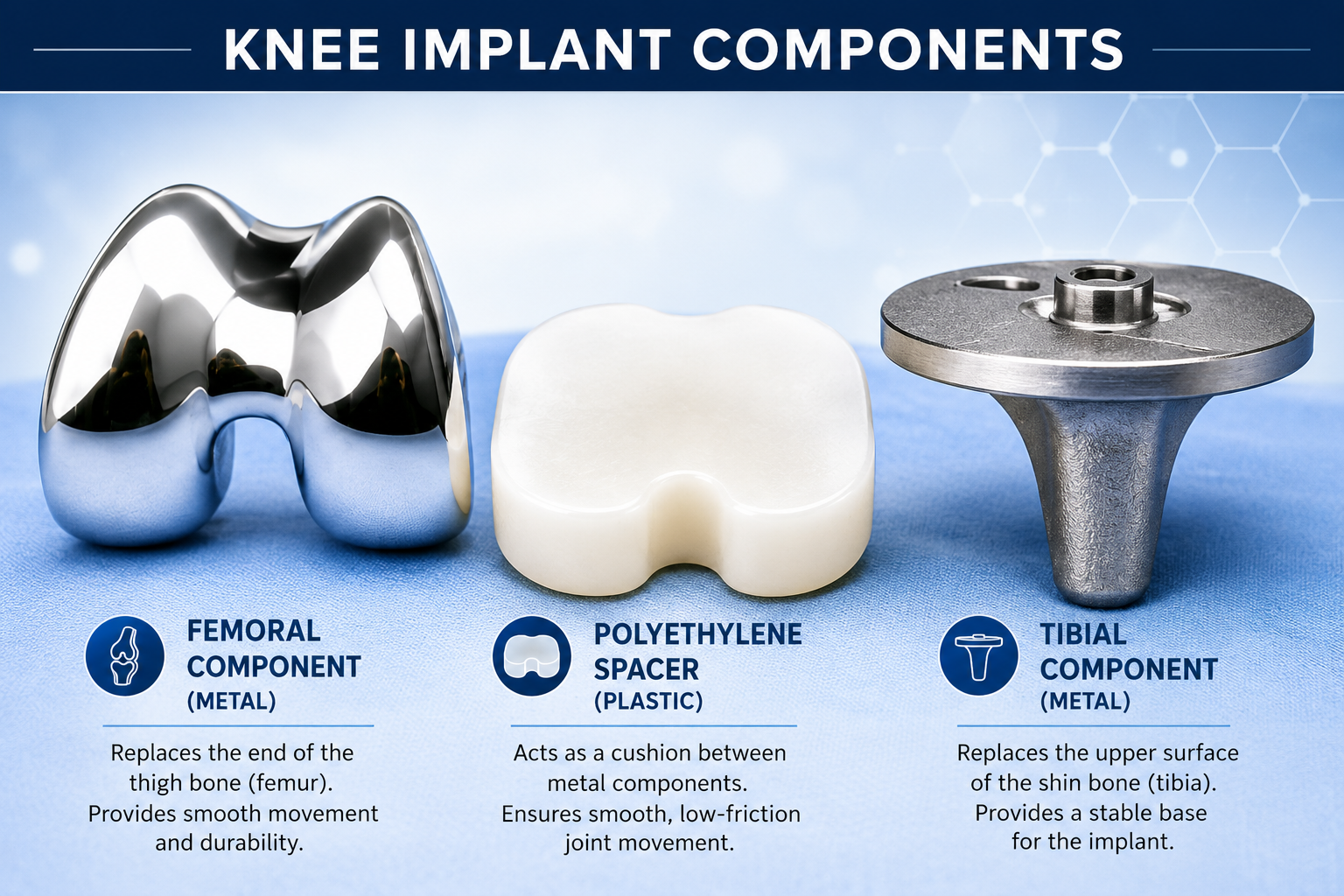
- A metal component that replaces the end of the thigh bone, or femur
- A metal component that replaces the upper surface of the shin bone, or tibia
- A durable plastic spacer that acts as a smooth bearing surface
- In some cases, a component that resurfaces the underside of the kneecap, or patella
These components are designed to work together to recreate a smoother, more stable knee joint. The implant allows the bones to move against a low-friction surface instead of rubbing directly against damaged cartilage.
Modern knee implants are manufactured using highly durable materials such as medical-grade metals and advanced polyethylene plastics. However, like any mechanical system, artificial joints can gradually experience wear over many years.
So, How Long Does a Knee Implant Usually Last?
For most patients, a modern knee replacement can last 15–20 years or more. Many patients experience excellent implant function for two decades or longer. The NHS states that knee replacements can last around 20 years or more, while AAOS reports that more than 90% of modern total knee replacements remain functional at 15 years.
However, the lifespan of an implant is not an exact expiry date. A patient may have a knee replacement that functions well for:
- 15 years
- 20 years
- 25 years
- 30 years or longer in some cases
The implant may not need to be replaced simply because a certain number of years have passed. If the patient has no significant pain, instability, loosening, or other problems, the implant may continue to be monitored rather than replaced.
The important point is that knee replacement surgery is not necessarily a temporary solution with a fixed expiration date. The lifespan is individual and depends on multiple factors.
Why Do Knee Implants Eventually Wear Out?
The most common reason for a knee implant requiring revision surgery is the gradual development of problems such as wear, loosening, instability, infection, or fracture.
1. Normal Wear and Tear
The plastic spacer between the metal components can gradually wear down over time. Everyday activities place forces on the knee. Walking, climbing stairs, standing, and other movements create repeated cycles of loading and movement. Over many years, this can cause gradual wear of the polyethylene component.
Tiny particles produced by wear may sometimes trigger an inflammatory response around the implant. In some patients, this can contribute to bone loss and loosening of the implant. This process usually occurs gradually.
2. Implant Loosening
A knee implant must remain firmly attached to the bone. Over time, the connection between the implant and the surrounding bone can weaken. When an implant becomes loose, a patient may experience:
- Increasing knee pain
- Pain while standing or walking
- A feeling that the knee is unstable
- Reduced ability to walk
- Swelling or stiffness
Implant loosening may be related to wear, bone changes, excessive stress, or other factors. Revision knee replacement may be considered if the loosening causes significant symptoms or affects the function of the joint.
3. Infection
Infection after knee replacement is uncommon but can be a serious complication. A deep infection involving the artificial joint may require prolonged treatment and sometimes additional surgery. In some cases, revision surgery may be needed. Warning signs can include:
- Persistent or increasing pain
- Redness and swelling
- Fever
- Drainage from the surgical wound
- Sudden worsening of knee function
Anyone with these symptoms after knee replacement should seek medical evaluation promptly.
4. Injury or Fracture
A significant fall or accident can damage the bones around a knee implant or affect the implant itself. For example, a fracture near the artificial joint may require additional surgery. The treatment depends on the location and severity of the fracture and whether the implant remains stable. Preventing falls is therefore an important part of protecting a knee replacement.
5. Instability
A knee replacement may sometimes become unstable. Patients may feel that the knee is giving way, shifting, buckling, or unsteady while walking. Some cases can be managed with physiotherapy and strengthening exercises, while other cases may require surgical evaluation.
What Factors Affect the Lifespan of a Knee Implant?
The lifespan of a knee implant can vary significantly from one person to another based on several factors.
Age at the Time of Surgery
Younger patients may place more total cycles of use on the implant during their lifetime. For example, a patient who receives a knee replacement at age 55 may potentially use the implant for several decades. A patient undergoing surgery at age 75 may have a different long-term risk profile.
Age alone, however, should not determine whether someone should undergo surgery. The decision should depend on pain, function, overall health, imaging findings, and the patient's individual circumstances.
Body Weight
Higher body weight can increase the mechanical forces placed on the knee during daily activities. Maintaining a healthy weight may help reduce stress on the artificial joint and support overall mobility.
This does not mean that every person with a higher body weight will experience implant failure. It simply means that weight is one of the factors that may influence mechanical stress on the replacement joint.
Activity Level
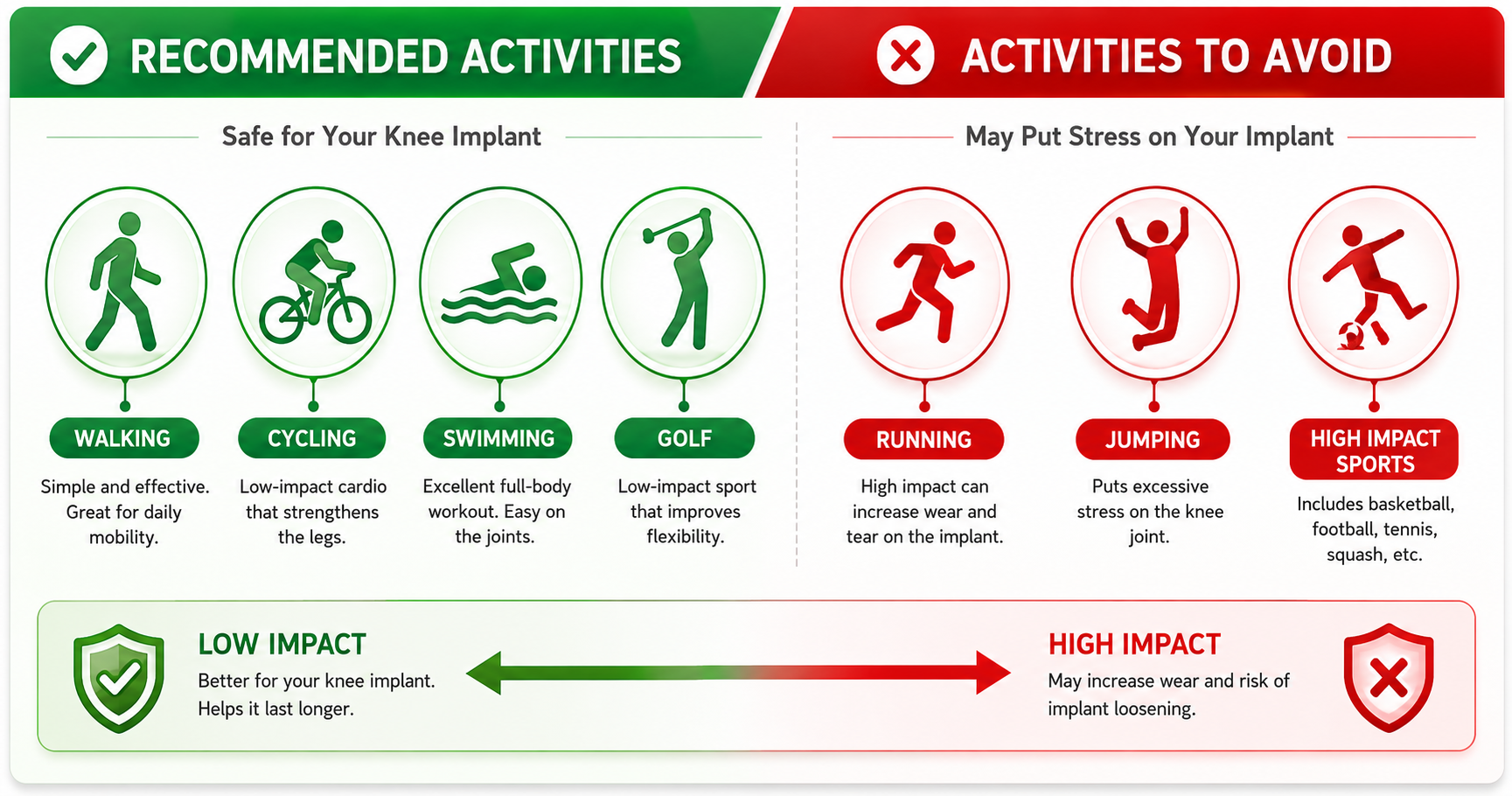
Regular physical activity is important after knee replacement. However, the type of activity matters. Generally, lower-impact activities are considered more suitable for long-term joint health. Examples include:
- Walking
- Swimming
- Cycling
- Golf
- Low-impact exercise
- Light hiking
High-impact activities such as repetitive jumping, running, and certain high-impact sports may place additional stress on the implant. AAOS recommends activity modification to help protect the knee replacement over time. Your orthopaedic surgeon can advise you about the activities that are appropriate for your specific implant and health condition.
Implant Design and Materials
Modern knee implants have continued to evolve. Factors that may influence long-term performance include implant design, material quality, fixation method, surgical technique, patient anatomy, and bone quality. However, the most expensive or newest implant is not automatically the best choice for every patient. Implant selection should be based on the individual's anatomy, condition, age, activity requirements, and the surgeon's clinical judgment.
Surgical Technique
Correct alignment and positioning of the implant are important for long-term function. The surgeon must carefully assess the condition of the bones, ligament balance, knee alignment, implant sizing, and soft-tissue balance. Accurate surgery can help the artificial joint function properly and may contribute to long-term satisfaction.
Following Rehabilitation
Rehabilitation after knee replacement plays an important role in recovery. Physiotherapy helps improve muscle strength, knee flexibility, balance, walking ability, and overall function. Strong muscles around the knee can help support movement and improve confidence during daily activities. Patients should follow their surgeon's and physiotherapist's recommendations regarding exercises and activity progression.
Can You Make a Knee Implant Last Longer?
Although no implant can be guaranteed to last forever, several habits may help protect it.
- Maintain a Healthy Body Weight: Reducing unnecessary stress on the joint can help support long-term mobility through a balanced diet and regular low-impact exercise.
- Stay Physically Active: Avoiding all activity is generally not the goal. Regular movement helps maintain muscle strength, joint mobility, balance, and cardiovascular health.
- Avoid Repetitive High-Impact Stress: Activities involving frequent jumping, hard landings, or repetitive high-impact loading may increase stress on the replacement knee.
- Prevent Falls: A fall can damage the bones around a knee replacement. Improve balance, use appropriate footwear, remove trip hazards, and improve lighting.
- Attend Follow-Up Appointments: Regular follow-ups allow your surgeon to assess the condition of the knee replacement using physical examination and X-rays. Routine monitoring can help identify changes early.
Does a Knee Implant Need to Be Replaced After 20 Years?
Not necessarily. A knee replacement does not automatically need revision surgery simply because it has reached 15 or 20 years. If the implant is stable, functioning well, not causing significant pain, not infected, and not severely worn, then your orthopaedic surgeon may recommend continued monitoring.
Revision surgery is usually considered when there is a specific problem affecting the function or safety of the artificial joint. Some knee implants can function well beyond 20 years. The NHS notes that many knee replacements last 20 years or more.
What Is Revision Knee Replacement?
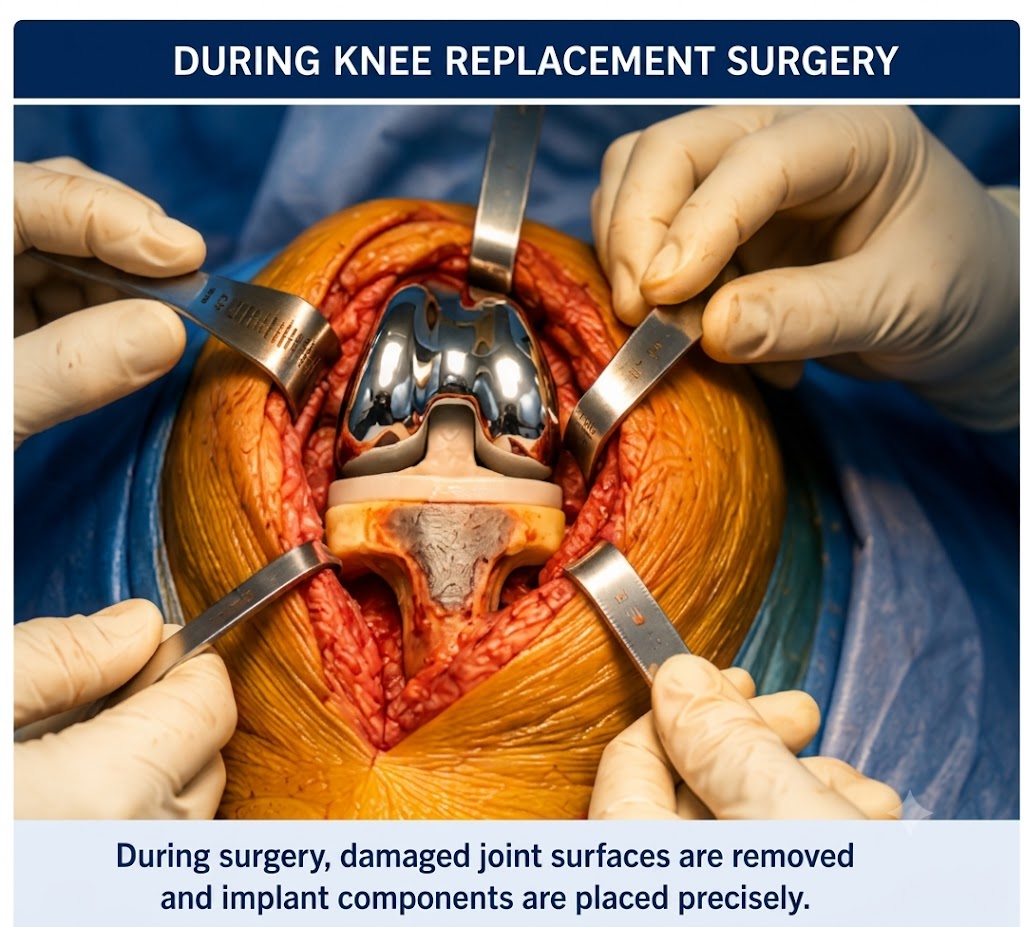
Revision knee replacement is surgery performed to address a problem with a previous knee replacement. During revision surgery, the surgeon may replace the worn plastic spacer, replace one or multiple implant components, treat bone loss, address infection, or improve stability.
Revision surgery can be more complex than the original knee replacement because the surgeon may need to remove existing components and work with bone that has changed over time. The exact procedure depends on the reason for revision and the condition of the existing implant.
What Are the Warning Signs of a Failing Knee Implant?
A knee replacement that has functioned well for years should be evaluated if new or worsening symptoms develop. Possible warning signs include:
- New or Increasing Pain: Pain that gradually returns after years of good function should not be ignored.
- Swelling: Persistent or recurrent swelling may have several causes and requires medical evaluation.
- Instability: A feeling that the knee is giving way or shifting may indicate a problem with stability.
- Reduced Movement: Increasing stiffness or difficulty bending and straightening the knee may need assessment.
- Difficulty Walking: A gradual decline in walking ability may be a sign that the knee requires evaluation.
- Sudden Symptoms After an Injury: Pain after a fall or accident should be assessed promptly.
It is important to remember that these symptoms do not automatically mean that the implant has failed. Several conditions can cause similar symptoms. A specialist evaluation and appropriate investigations are needed to identify the cause.
Can a Knee Implant Last a Lifetime?
For some patients, yes. Whether a knee implant lasts for the rest of a person's life depends largely on the age at which the surgery was performed, the patient's general health, activity levels, body weight, implant performance, and whether complications occur.
A patient undergoing knee replacement later in life may never require revision surgery. A younger patient may have a greater chance of needing revision during their lifetime simply because the implant may be exposed to more years of use. However, advances in implant technology, surgical techniques, and postoperative care continue to improve the long-term outcomes of knee replacement surgery.
Is It Better to Delay Knee Replacement Surgery?
Many people worry that having knee replacement surgery “too early” will guarantee the need for another replacement later. However, the timing of surgery should not be based only on age or fear of implant wear.
If severe arthritis is causing persistent pain, difficulty walking, poor sleep, difficulty climbing stairs, loss of independence, or inability to perform normal activities, then it may be appropriate to discuss knee replacement with an orthopaedic surgeon. The decision should be individualized.
Patients should not undergo surgery simply because an X-ray shows arthritis, but they also should not necessarily continue suffering severe symptoms solely because they are concerned about the future lifespan of the implant. A detailed discussion with an experienced orthopaedic surgeon can help determine the appropriate timing.
The Bottom Line: How Long Does a Knee Implant Last?
A modern knee implant commonly lasts 15 to 20 years or more, and many implants continue functioning well beyond this period. The lifespan varies from person to person. Factors such as activity level, body weight, implant design, surgical technique, bone quality, overall health, and complications can all affect durability.
The good news is that a knee replacement is designed to provide long-term pain relief and improved function. With appropriate activity, rehabilitation, healthy lifestyle habits, and regular medical follow-up, many patients enjoy an active life with their knee replacement for decades.
If you have a knee replacement and develop new pain, swelling, instability, stiffness, or difficulty walking, consult an orthopaedic specialist for evaluation. Early assessment can help identify potential problems and determine the most appropriate treatment.
A knee implant does not have a fixed expiration date. Its longevity is individual—and proper care can help you get the most from your knee replacement.
Frequently Asked Questions
Most modern knee replacements last approximately 15 to 20 years or more. Many implants continue functioning beyond 20 years, depending on factors such as the patient's activity level, weight, health, implant design, and surgical technique.
Yes, some knee replacements may continue functioning for 25 to 30 years or longer. However, the lifespan varies between individuals, and no implant can be guaranteed to last a specific number of years.
No. A knee replacement does not automatically need revision surgery after 20 years. If the implant remains stable and functions well without significant symptoms, continued monitoring may be recommended.
Common causes include normal wear of the plastic spacer, implant loosening, infection, instability, bone loss, or injury around the artificial joint.
Appropriate exercise is generally important for maintaining strength and mobility. Low-impact activities are often suitable, while repetitive high-impact activities may place additional stress on the implant. Patients should discuss their exercise routine with their orthopaedic surgeon.
Possible signs include new or worsening pain, persistent swelling, instability, stiffness, difficulty walking, or symptoms following an injury. These symptoms can have several causes and should be evaluated by an orthopaedic specialist.
Revision knee replacement can be more complex because the surgeon may need to remove existing components, manage bone loss, and use specialized implants. The complexity depends on the reason for revision and the condition of the existing knee replacement.
Maintaining a healthy weight, staying physically active with appropriate low-impact exercises, avoiding unnecessary high-impact stress, preventing falls, following rehabilitation recommendations, and attending follow-up appointments can help support the long-term function of a knee replacement.